


Cyclodextrin: The Versatile Excipient Revolutionizing Drug and Food Industries
Cyclodextrin is a naturally occurring cyclic oligosaccharide that has become an important excipient in pharmaceutical, food, nutraceutical, and industrial applications. Its unique molecular structure, featuring a hydrophobic inner cavity and hydrophilic outer surface, enables it to form inclusion complexes with various guest molecules.
From improving drug solubility and bioavailability to enhancing food stability, masking unpleasant tastes, and protecting sensitive compounds, Cyclodextrin provides versatile solutions for modern formulation challenges.
Understanding the Molecular Structure of Cyclodextrin
Supramolecular Chemistry of Cyclodextrins
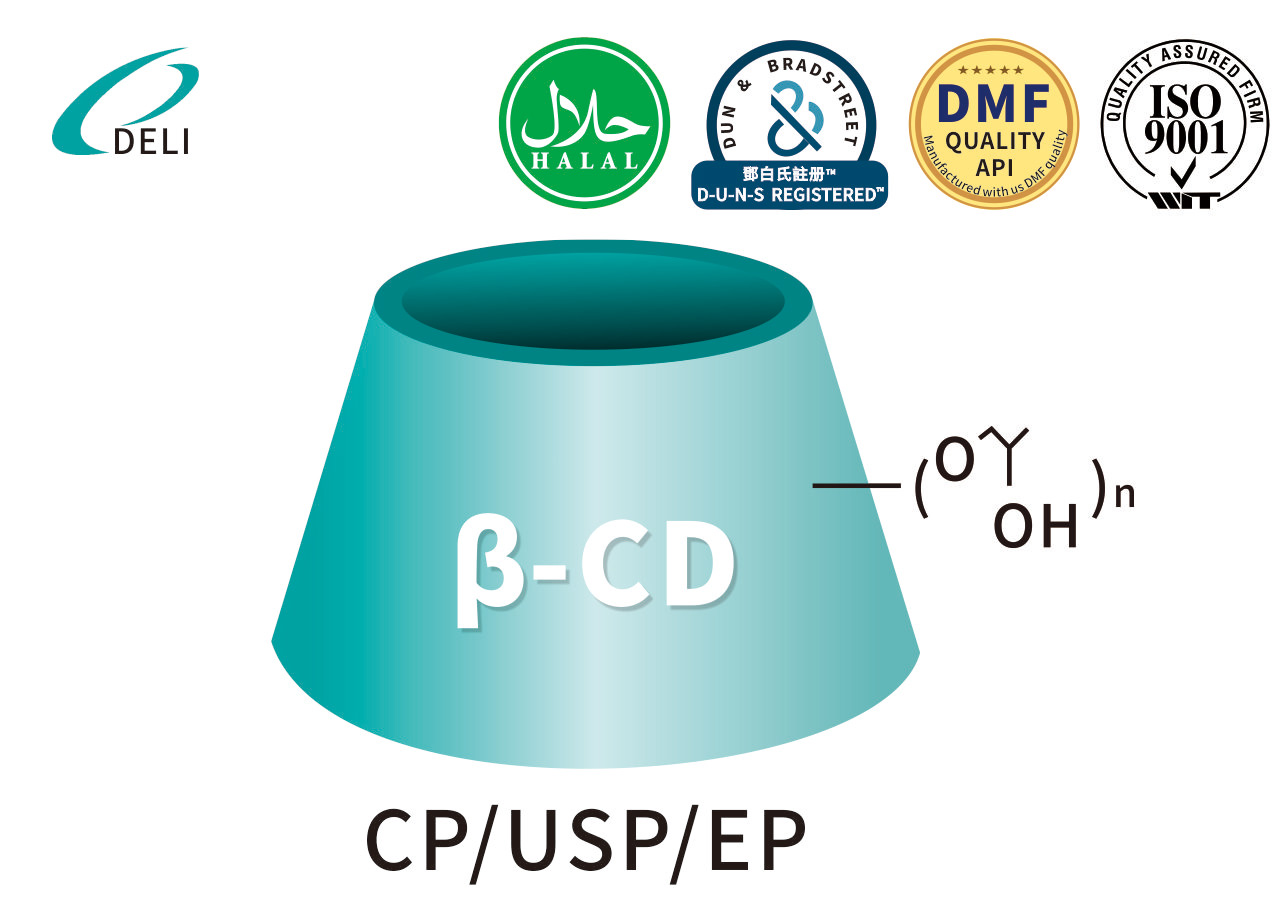
Cyclodextrins are cone-shaped molecules composed of glucose units connected by α-1,4-glycosidic bonds. The three main types are alpha-cyclodextrin, beta-cyclodextrin, and gamma-cyclodextrin.
- Alpha-Cyclodextrin: Contains six glucose units.
- Beta-Cyclodextrin: Contains seven glucose units.
- Gamma-Cyclodextrin: Contains eight glucose units.
The Role of Cyclodextrin Cavity Size
Different types of Cyclodextrin have different cavity sizes, allowing them to interact with molecules of different dimensions and chemical characteristics. This size-dependent molecular recognition is important for selecting the appropriate cyclodextrin for a specific formulation.
Factors Affecting Inclusion Complex Formation
The efficiency of inclusion complex formation depends on several factors, including temperature, pH, concentration ratio, molecular size, and the compatibility between the host and guest molecules. Hydrophobic interactions and van der Waals forces contribute significantly to complex formation.
Pharmaceutical Applications of Cyclodextrin
Improving Drug Solubility and Bioavailability
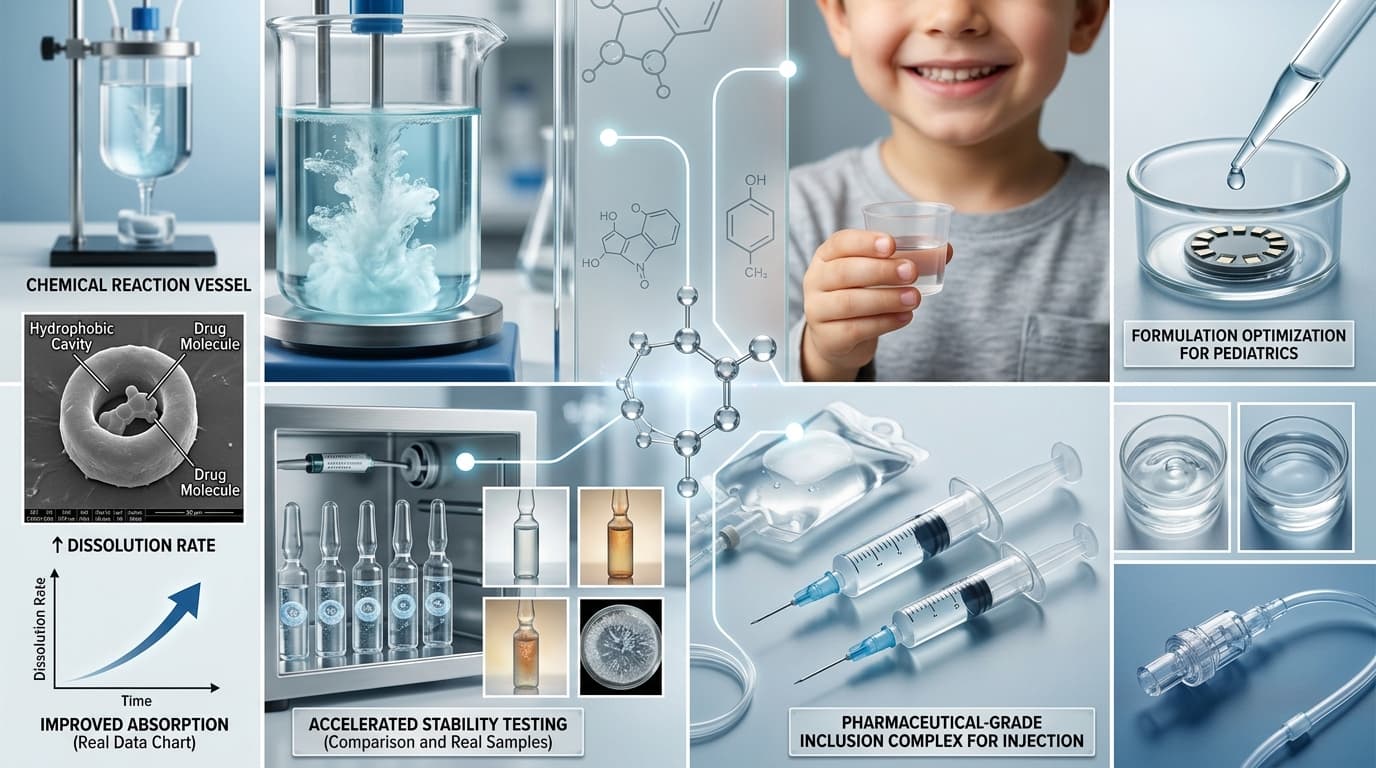
Poor aqueous solubility remains a major challenge in pharmaceutical formulation. Cyclodextrin can encapsulate poorly water-soluble drug molecules within its hydrophobic cavity, helping improve apparent solubility and dissolution performance.
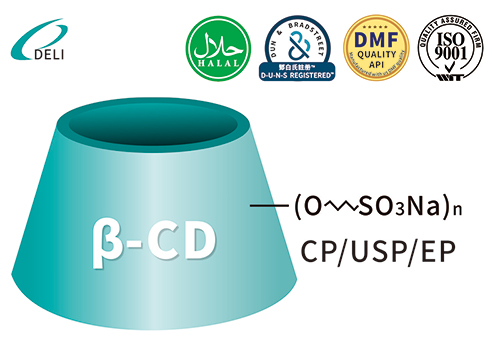
This approach can contribute to improved drug absorption and bioavailability when the inclusion complex is appropriately designed. Cyclodextrin derivatives such as hydroxypropyl betadex and sulfobutyl ether beta-cyclodextrin are particularly important in pharmaceutical drug delivery.
Enhancing Drug Stability
Cyclodextrin inclusion complexes can help protect sensitive active pharmaceutical ingredients from environmental factors such as light, oxygen, heat, and humidity. This molecular encapsulation can improve formulation stability and help maintain product quality during storage.
Taste and Odor Masking
Unpleasant taste and odor can reduce patient acceptance, particularly in pediatric and oral formulations. Cyclodextrin can encapsulate certain molecules responsible for undesirable taste or odor, helping improve the sensory properties of pharmaceutical products.
Formulation of Injectable Products
Cyclodextrin derivatives can be used as pharmaceutical solubilizers in formulations where poor aqueous solubility presents a challenge. Hydroxypropyl betadex and sulfobutyl ether beta-cyclodextrin are examples of modified cyclodextrins used in pharmaceutical drug delivery applications.
Cyclodextrin Applications in Food and Nutraceuticals
Food Preservation and Quality Improvement
Cyclodextrin can encapsulate natural antioxidants, antimicrobial compounds, essential oils, and flavor ingredients. Encapsulation may help protect sensitive components during processing and storage while reducing the intensity of strong flavors or odors.
Improving Nutrient Bioavailability
Some nutraceutical ingredients have limited water solubility and bioavailability. Cyclodextrin complexation can improve the apparent solubility and dissolution characteristics of compounds such as curcumin and other poorly water-soluble ingredients.
Flavor Protection and Controlled Release
Volatile flavor compounds can be sensitive to heat, oxygen, and storage conditions. Cyclodextrin encapsulation can help protect these compounds during processing and provide controlled release during consumption.
Industrial Applications of Cyclodextrin
Environmental Applications
Beyond pharmaceutical and food applications, cyclodextrin-based materials are being investigated for environmental applications. Their molecular recognition and inclusion properties can help capture selected organic pollutants from water and other environmental matrices.
Chemical Sensors
The host-guest recognition properties of Cyclodextrin derivatives can also be used in chemical sensing technologies. Modified cyclodextrins may selectively interact with target molecules, supporting applications in food safety, environmental monitoring, and pharmaceutical quality control.
The Science Behind Cyclodextrin Inclusion Complexes
Understanding Inclusion Complex Formation
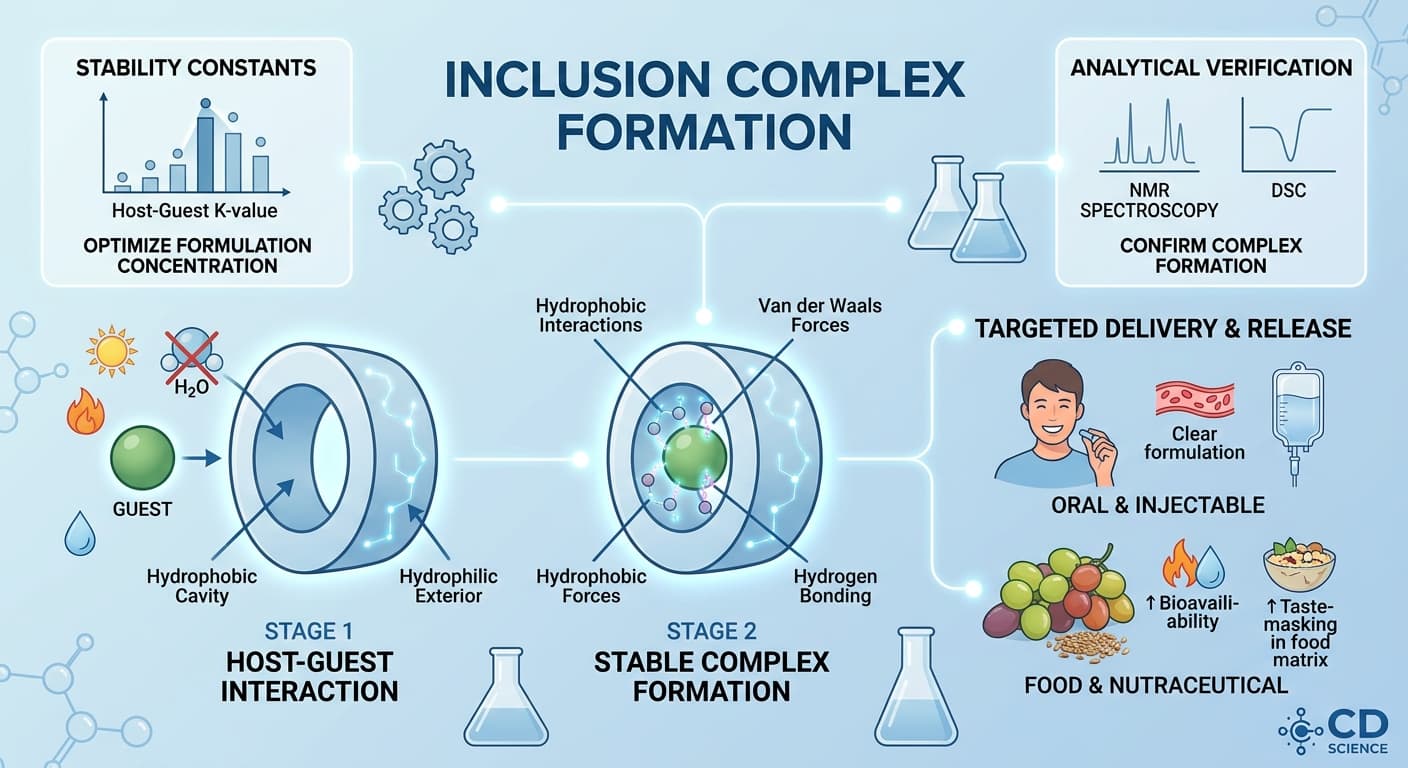
The formation of a cyclodextrin inclusion complex is driven by several molecular interactions, including hydrophobic interactions, van der Waals forces, and hydrogen bonding. The guest molecule interacts with the hydrophobic cavity while the hydrophilic exterior remains compatible with aqueous environments.
The Role of Stability Constants
The stability constant provides useful information about the interaction between the cyclodextrin host and guest molecule. Understanding complex stability helps formulators optimize cyclodextrin concentration and formulation conditions for specific applications.
Advanced Analytical Techniques
Several analytical techniques can be used to investigate cyclodextrin inclusion complexes, including nuclear magnetic resonance spectroscopy, differential scanning calorimetry, and X-ray crystallography. These methods help researchers understand complex formation and optimize formulation performance.
Manufacturing and Quality Considerations
Manufacturing Expertise
Consistent cyclodextrin production requires controlled manufacturing processes and comprehensive quality management. Experienced manufacturers can provide reliable batch-to-batch consistency for pharmaceutical, food, and industrial applications.
Quality and Stability Control
Important manufacturing parameters may include temperature, pH, reaction time, purification conditions, drying processes, and storage conditions. Effective process control helps maintain consistent product quality and performance.
Regulatory Support
For pharmaceutical applications, appropriate technical and regulatory documentation is essential. Reliable suppliers should be able to provide quality documentation and technical support to assist customers with formulation development and regulatory submissions.
How to Choose the Right Cyclodextrin
Selecting the appropriate Cyclodextrin depends on the characteristics of the guest molecule, intended application, required solubility improvement, administration route, formulation composition, and regulatory requirements.
Alpha-cyclodextrin, beta-cyclodextrin, gamma-cyclodextrin, and modified derivatives each offer different molecular characteristics. Formulators should evaluate molecular compatibility and conduct experimental screening before selecting the most suitable cyclodextrin for a specific application.
Conclusion
Cyclodextrin is a versatile excipient with applications across pharmaceutical, food, nutraceutical, environmental, and industrial fields. Its unique host-guest chemistry provides valuable solutions for improving solubility, stability, bioavailability, taste, odor, and controlled release.
As formulation technologies continue to advance, cyclodextrin and its derivatives are expected to play an increasingly important role in developing innovative pharmaceutical and food products.
Frequently Asked Questions About Cyclodextrin
1. How is Cyclodextrin different from other solubilizers?
Unlike conventional solubilizers, Cyclodextrin can form inclusion complexes with suitable guest molecules. This mechanism can provide benefits beyond solubility improvement, including enhanced stability and taste masking.
2. How do I choose the right type of Cyclodextrin?
The choice depends mainly on the molecular size, structure, polarity, and intended application of the guest molecule. Alpha-, beta-, and gamma-cyclodextrin have different cavity sizes and therefore show different molecular compatibility.
3. Is Cyclodextrin safe for pharmaceutical applications?
The safety profile depends on the specific cyclodextrin, derivative, grade, dose, and route of administration. Pharmaceutical-grade cyclodextrins should be selected according to applicable regulatory and pharmacopeial requirements.
4. What factors affect the stability of a Cyclodextrin inclusion complex?
Molecular fit, temperature, pH, concentration, competing molecules, and formulation composition can all affect inclusion complex stability.
5. Can Cyclodextrin control drug release?
Depending on the formulation design, cyclodextrin complexes can influence drug dissolution and release behavior. Combining cyclodextrins with polymers or other excipients can provide additional control over drug release.
6. Can Cyclodextrin be combined with other excipients?
Yes. Cyclodextrins can be incorporated into formulations with polymers, surfactants, and other pharmaceutical or food ingredients. Compatibility and formulation performance should be evaluated for each specific application.
Transform Your Formulations with DELI Biochemical's Cyclodextrin Solutions
DELI Biochemical is an experienced Cyclodextrin manufacturer specializing in pharmaceutical excipients and cyclodextrin derivatives. With more than 26 years of manufacturing experience and reliable production capabilities, DELI Biochemical provides cyclodextrin solutions for pharmaceutical formulation, drug delivery, food, and other applications.
Contact our technical team at xadl@xadl.com to discuss your formulation requirements and explore suitable cyclodextrin solutions.
References
- Jambhekar, S.S., Breen, P. "Cyclodextrins in pharmaceutical formulations II: solubilization, binding constant, and complexation efficiency." Drug Discovery Today 21, no. 2 (2016): 363-368.
- Brewster, M.E., Loftsson, T. "Cyclodextrins as pharmaceutical solubilizers." Advanced Drug Delivery Reviews 59, no. 7 (2007): 645-666.
- Kurkov, S.V., Loftsson, T. "Cyclodextrins." International Journal of Pharmaceutics 453, no. 1 (2013): 167-180.
- Szejtli, J. "Introduction and General Overview of Cyclodextrin Chemistry." Chemical Reviews 98, no. 5 (1998): 1743-1754.
- Carrier, R.L., Miller, L.A., Ahmed, I. "The utility of cyclodextrins for enhancing oral bioavailability." Journal of Controlled Release 123, no. 2 (2007): 78-99.
- Challa, R., Ahuja, A., Ali, J., Khar, R.K. "Cyclodextrins in drug delivery: an updated review." AAPS PharmSciTech 6, no. 2 (2005): E329-E357.


