Article Summary
Developing pharmaceutical formulations with poorly water-soluble active pharmaceutical ingredients (APIs) remains a significant challenge for drug manufacturers. Limited aqueous solubility can affect dissolution behavior, formulation stability, manufacturing flexibility, and the consistency of finished products. Hydroxypropyl Betadex (HPBCD), also known as hydroxypropyl-beta-cyclodextrin or HP-β-CD, is a pharmaceutical excipient designed to address these formulation challenges through molecular inclusion complexation.
This article explains the chemical characteristics, solubilization mechanism, pharmaceutical applications, formulation development process, quality considerations, and procurement factors associated with Hydroxypropyl Betadex HPBCD Pharma Grade. It also provides practical guidance for pharmaceutical researchers and manufacturers evaluating HPBCD for different dosage forms.
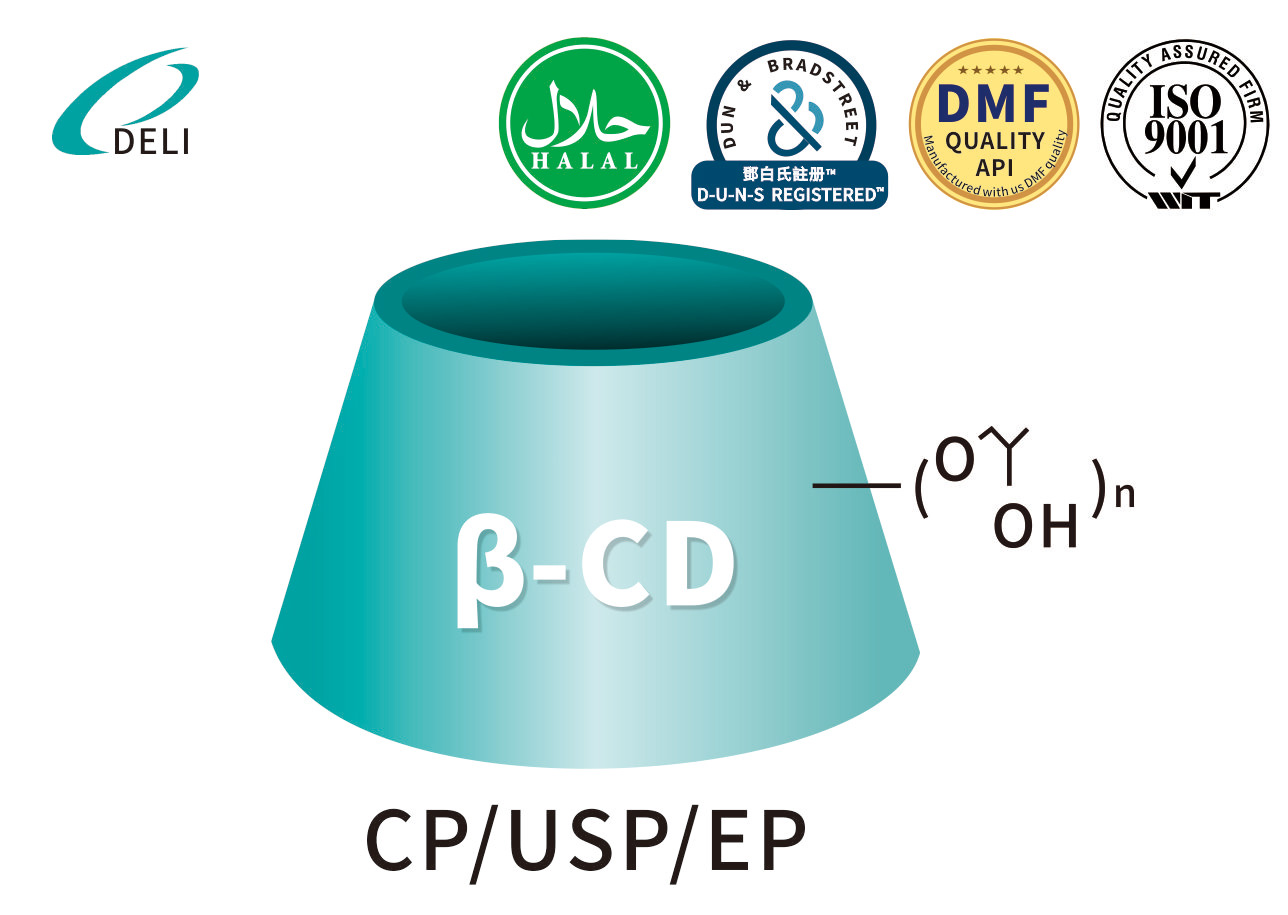
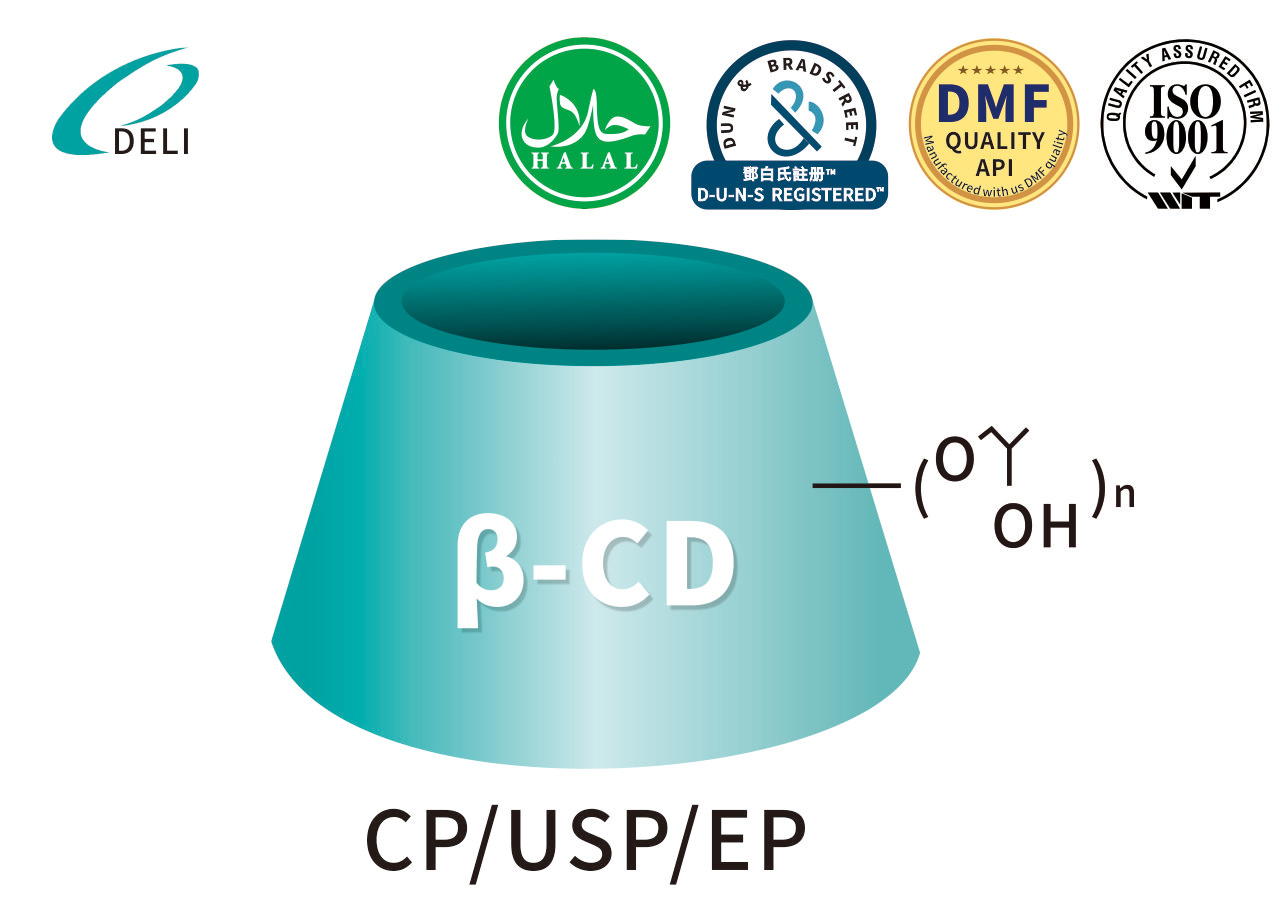
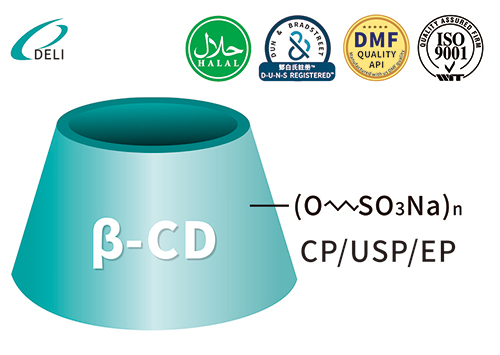
Hydroxypropyl Betadex is a chemically modified derivative of beta-cyclodextrin. It is produced by introducing hydroxypropyl groups into the beta-cyclodextrin molecular structure. This modification improves its water solubility and makes it a valuable excipient for pharmaceutical formulation development.
Beta-cyclodextrin consists of seven glucose units connected through alpha-1,4 glycosidic bonds, forming a ring-shaped molecular structure. Its distinctive architecture includes a relatively hydrophilic exterior and a comparatively hydrophobic internal cavity. This cavity can accommodate suitable guest molecules, including certain poorly water-soluble drug substances.
By introducing hydroxypropyl groups, the original cyclodextrin structure becomes more water-soluble. Consequently, HPBCD can be used in aqueous pharmaceutical systems where conventional beta-cyclodextrin may have solubility limitations.
| Property | Description |
|---|---|
| Product Name | Hydroxypropyl Betadex |
| Common Abbreviation | HPBCD or HP-β-CD |
| Alternative Name | Hydroxypropyl-beta-cyclodextrin |
| CAS Number | 128446-35-5 |
| Molecular Structure | Hydroxypropyl-substituted beta-cyclodextrin |
| Appearance | Typically white or almost white powder |
| Solubility | Highly soluble in water, depending on grade and test conditions |
| Primary Pharmaceutical Function | Solubilizing and complexing excipient |
One important characteristic of HPBCD is its degree of molar substitution (MS). This value describes the average number of hydroxypropyl groups introduced per glucose unit. It influences molecular properties, solubility, and complexation behavior.
The primary mechanism of Hydroxypropyl Betadex is the formation of inclusion complexes. This process involves non-covalent interactions between a suitable drug molecule and the internal cavity of the cyclodextrin structure.
The internal cavity of HPBCD provides a relatively hydrophobic environment, while its outer surface interacts favorably with water. When a compatible drug molecule is introduced, part or all of the molecule may enter the cavity.
The resulting host-guest interaction is generally reversible. The drug does not need to form a permanent covalent bond with HPBCD. Instead, the complex exists in equilibrium with free drug molecules and free HPBCD molecules.
This interaction can improve the apparent aqueous solubility of certain poorly water-soluble compounds.
Many pharmaceutical APIs have hydrophobic molecular regions that limit their ability to dissolve in water. When an appropriate drug forms a soluble complex with HPBCD, the cyclodextrin can help maintain the drug in the aqueous phase.
The effectiveness depends on several factors, including:
Some drug molecules are sensitive to environmental factors such as light, oxidation, or chemical degradation. Inclusion complexation may reduce the exposure of susceptible molecular regions to certain external conditions.
However, stabilization is not universal. The actual protective effect must be established through appropriate degradation studies, compatibility testing, and long-term stability evaluation.
HPBCD does not permanently bind every drug molecule. The inclusion complex continuously participates in a dynamic equilibrium:
Free Drug + HPBCD ⇌ Drug-HPBCD Inclusion Complex
This reversible process allows the drug to associate with and dissociate from the cyclodextrin depending on the surrounding formulation conditions.
Understanding this equilibrium helps formulation scientists determine the appropriate HPBCD concentration and evaluate whether complexation can achieve the desired drug concentration.
Hydroxypropyl Betadex offers several formulation advantages, particularly when developing products containing APIs with limited aqueous solubility.
Helps increase the apparent solubility of compatible hydrophobic drug substances through inclusion complex formation.
Supports the development of different liquid and solid dosage forms when the API is compatible.
May help protect susceptible drug molecules against selected degradation pathways.
Its high aqueous solubility makes it useful for developing pharmaceutical systems based on water.
Poor water solubility can restrict the concentration of an API that can be incorporated into an aqueous preparation. HPBCD may help overcome this limitation when the drug has suitable complexation characteristics.
This can give pharmaceutical developers more options when evaluating liquid preparations, especially when organic solvents or alternative solubilizing systems are undesirable.
HPBCD can be evaluated in oral liquids, injectable preparations, ophthalmic formulations, and other pharmaceutical systems, subject to route-specific safety and regulatory requirements.
It can also be investigated in solid formulations prepared through processes such as spray drying or freeze drying.
For certain poorly soluble APIs, HPBCD complexation may improve dissolution behavior by increasing the amount of drug available in an aqueous environment. The extent of improvement depends on the drug's physicochemical properties and the final formulation design.
Importantly, improved apparent solubility does not automatically guarantee increased bioavailability or clinical effectiveness. These outcomes require separate experimental and clinical evaluation.
HPBCD is used as a functional pharmaceutical excipient in different drug development projects. Its applications depend on the molecular compatibility of the active ingredient, the intended administration route, and the required product characteristics.
One important application of pharmaceutical-grade HPBCD is the development of aqueous injectable preparations containing poorly water-soluble drug substances.
Some APIs cannot reach the required concentration in water without additional formulation strategies. HPBCD can help increase apparent drug solubility through complexation.
When evaluating HPBCD for injectable products, developers must consider:
Oral solutions and suspensions may encounter difficulties when an API has limited water solubility. HPBCD can be considered as a solubilizing excipient to improve the apparent drug concentration in suitable aqueous systems.
It may also help pharmaceutical developers investigate more consistent liquid formulations. However, taste, viscosity, dilution behavior, and storage stability should be assessed during development.
Ophthalmic formulations require careful control of ingredient compatibility, pH, osmolality, sterility, and ocular tolerability.
HPBCD may be investigated as a solubilizing excipient for suitable ophthalmic APIs. Its use must be supported by formulation-specific safety and compatibility studies.
Some nasal and local drug delivery formulations require aqueous systems with suitable drug concentrations. HPBCD can be evaluated when inclusion complexation is compatible with the target API and administration route.
HPBCD is not limited to liquid formulations. Drug-cyclodextrin complexes may also be converted into solid materials using appropriate processing methods.
Examples include:
| Dosage Form | Potential Role of HPBCD | Key Evaluation |
|---|---|---|
| Injectable solutions | Improve apparent aqueous solubility | Safety, endotoxin, osmolality and compatibility |
| Oral liquids | Support drug solubilization | Taste, stability and dilution behavior |
| Ophthalmic solutions | Assist solubilization of compatible APIs | Ocular tolerability and sterility |
| Nasal preparations | Support aqueous drug delivery | Mucosal compatibility and stability |
| Solid formulations | Form inclusion-complex intermediates | Moisture, dissolution and solid-state properties |
Successful HPBCD application requires more than adding the excipient to an API solution. A systematic formulation development process helps identify suitable concentrations, processing conditions, and performance characteristics.
Start by evaluating the API's aqueous solubility, molecular structure, pKa, lipophilicity, chemical stability, and intended drug concentration.
These properties help determine whether HPBCD is a suitable complexing agent.
Conduct preliminary compatibility experiments to investigate whether the API can interact with the HPBCD cavity.
Phase-solubility studies are particularly useful for examining the relationship between HPBCD concentration and apparent drug solubility.
Evaluate different API-to-HPBCD ratios instead of assuming a universal formulation ratio.
Common experimental approaches include screening different molar ratios and measuring the resulting drug solubility, complexation efficiency, and physical stability.
Depending on the API and intended dosage form, possible preparation methods include:
Each method should be assessed for complex formation, residual solvents, process efficiency, and final product properties.
Investigate pH, temperature, mixing time, concentration, and the presence of other excipients.
Other ingredients may compete with the API for cyclodextrin binding or influence the physical stability of the system.
Evaluate the final preparation through appropriate analytical methods, including drug assay, dissolution, solubility, impurity profiling, physical stability, and accelerated and long-term stability studies.
For sterile products, additional route-specific quality requirements must be addressed.
Even when pharmaceutical-grade HPBCD is used, formulation results can vary depending on the properties of the API and the surrounding formulation environment.
The degree of molar substitution is an important quality attribute. Different substitution levels can affect the molecular characteristics, solubility, and interaction behavior of HPBCD.
Pharmaceutical developers should review the actual product specification and batch analytical results rather than relying only on the product name.
Not every poorly soluble drug forms an effective inclusion complex with HPBCD. Molecular size, geometry, hydrophobicity, and functional groups can influence complexation.
Some APIs may fit into the cavity more effectively than others. In some cases, only part of a drug molecule enters the cavity.
Changes in pH may affect the ionization state of an API and consequently its interaction with HPBCD. Temperature can also influence complexation equilibrium and the solubility of the components.
For this reason, formulation studies should be conducted under conditions relevant to the intended manufacturing process and product storage environment.
Polymers, surfactants, preservatives, and other formulation ingredients may affect HPBCD complexation behavior.
Competitive interactions should be investigated when developing multi-component pharmaceutical systems. A formulation that performs well with only API and HPBCD may behave differently after additional excipients are introduced.
Increasing HPBCD concentration may improve drug solubilization in some systems, but higher concentrations can also affect viscosity, osmolality, total excipient exposure, and processing characteristics.
The optimal concentration should therefore be selected according to the intended dosage form, API requirements, route-specific safety considerations, and manufacturing constraints.
Quality consistency is particularly important when selecting pharmaceutical excipients. Variations in raw materials or manufacturing processes may affect formulation performance and product reproducibility.
Hydroxypropyl Betadex Pharma Grade should be evaluated against the applicable pharmacopoeial monograph and the specific requirements of the intended pharmaceutical application.
| Quality Attribute | Why It Matters |
|---|---|
| Identification | Confirms the identity of the excipient. |
| Assay and composition | Supports consistency with the applicable specification. |
| Molar substitution | Influences molecular characteristics and performance. |
| Water content | Important for material handling and formulation stability. |
| pH | Helps assess consistency and compatibility. |
| Residual solvents | Supports control of process-related impurities. |
| Related substances and impurities | Helps maintain pharmaceutical material quality. |
| Microbial quality | Important according to the intended application and grade. |
| Endotoxin | Particularly relevant when required for parenteral applications. |
Hydroxypropyl Betadex is described in recognized pharmaceutical compendia, including the United States Pharmacopeia and the European Pharmacopoeia.
However, the presence of a pharmacopoeial monograph does not automatically establish that every commercial product complies with its requirements. Buyers should request current specifications and batch-specific Certificates of Analysis (COAs).
Depending on the intended market and application, useful documentation may include:
Buyers should confirm the current revision of the applicable USP-NF or Ph. Eur. requirements and verify that the supplier's specific grade meets the intended application requirements.
Choosing the right Hydroxypropyl Betadex supplier is an important purchasing decision for pharmaceutical companies, contract manufacturers, and formulation research organizations.
Price is only one part of the evaluation. Product consistency, documentation, manufacturing capabilities, and supply reliability can have a direct impact on development schedules and production planning.
Confirm whether the supplier offers pharmaceutical-grade HPBCD suitable for your intended application. Ask for the current specification and a representative COA.
Do not assume that technical-grade, food-grade, and pharmaceutical-grade products are interchangeable.
Review the manufacturer's quality management system, raw material controls, manufacturing procedures, testing capabilities, and batch traceability arrangements.
A reliable manufacturer should be able to explain how product quality is monitored throughout production.
Reliable documentation helps buyers evaluate materials more efficiently and supports internal quality assessments.
It is also beneficial to work with a supplier that can respond to technical questions concerning specifications, product handling, packaging, and batch information.
For commercial pharmaceutical production, a consistent supply of raw materials is essential. Buyers should evaluate production capacity, lead times, packaging options, and the manufacturer's ability to support repeat orders.
| Evaluation Criteria | Questions to Ask |
|---|---|
| Product quality | Does the material meet the required pharmaceutical specification? |
| Documentation | Can the supplier provide a current COA, TDS, and SDS? |
| Manufacturing | Is the production and quality control process documented? |
| Batch consistency | Can batch-to-batch consistency be demonstrated? |
| Supply capacity | Can the supplier support sample evaluation and recurring orders? |
| Technical service | Can the supplier respond to product and specification questions? |
When sourcing Hydroxypropyl Betadex for pharmaceutical formulation projects, buyers need a supplier that understands cyclodextrin products and the quality expectations of pharmaceutical customers.
Xi'an Deli Biochemical Industry Co., Ltd. specializes in cyclodextrins and their derivatives, providing products for pharmaceutical and related applications.
For customers evaluating Hydroxypropyl Betadex HPBCD Pharma Grade, working directly with an experienced manufacturer can help simplify product communication, specification review, and supply coordination.
Before placing an order, pharmaceutical buyers are encouraged to discuss their intended application, required grade, target specifications, packaging preferences, and documentation requirements with the supplier.
Although HPBCD provides useful formulation capabilities, developers may encounter challenges during laboratory evaluation, scale-up, or commercial manufacturing.
Possible reason: The API may have limited compatibility with the HPBCD cavity, or the selected concentration and formulation conditions may not support effective complexation.
Suggested approach: Conduct phase-solubility studies, investigate alternative molar ratios, and evaluate pH-dependent API behavior.
Possible reason: Dilution may change the equilibrium between free drug and the inclusion complex, potentially resulting in drug precipitation.
Suggested approach: Test the formulation under realistic dilution conditions and assess the impact of concentration, pH, and other excipients.
Possible reason: Differences in raw material characteristics, substitution level, moisture content, or processing conditions may contribute to variability.
Suggested approach: Establish material acceptance criteria, review batch COAs, and maintain appropriate supplier qualification and incoming quality controls.
Possible reason: Some formulation components may compete for cyclodextrin binding or alter the physical properties of the formulation.
Suggested approach: Conduct compatibility studies using the complete formulation rather than evaluating HPBCD only with the API.
Possible reason: Mixing efficiency, temperature distribution, drying conditions, and processing time may change when moving from laboratory to industrial production.
Suggested approach: Establish critical process parameters during pilot-scale studies and confirm that the selected manufacturing process consistently produces the required material attributes.
Hydroxypropyl Betadex is primarily used as a pharmaceutical solubilizing and complexing excipient. It can form inclusion complexes with suitable drug molecules to improve their apparent aqueous solubility and may support the development of liquid and solid pharmaceutical formulations.
Yes. HPBCD is a commonly used abbreviation for hydroxypropyl-beta-cyclodextrin, also known as hydroxypropyl betadex or HP-β-CD.
HPBCD can accommodate suitable hydrophobic regions of drug molecules within its internal cavity. The resulting reversible inclusion complex can help maintain the drug in an aqueous environment and increase its apparent solubility.
Yes, HPBCD has been used in parenteral formulation development. However, the selected grade, concentration, endotoxin control, microbiological quality, route-specific safety, and applicable regulatory requirements must be carefully evaluated.
HPBCD is a hydroxypropyl-modified derivative of beta-cyclodextrin. The modification generally improves aqueous solubility compared with unmodified beta-cyclodextrin, making HPBCD useful in pharmaceutical aqueous formulations.
In typical inclusion complexation, HPBCD interacts with the drug through reversible, non-covalent interactions. It does not require covalent modification of the API. Nevertheless, chemical compatibility should be confirmed through appropriate studies.
The required concentration depends on API solubility, molecular compatibility, complexation efficiency, desired drug concentration, formulation pH, and the intended administration route. Experimental optimization is necessary for each formulation.
Yes. HPBCD can be evaluated for suitable oral liquid and solid formulations. Its use depends on the API, excipient concentration, intended exposure, formulation characteristics, and applicable safety requirements.
Buyers should generally request a Certificate of Analysis, Technical Data Sheet, Safety Data Sheet, applicable pharmacopoeial compliance information, and other relevant quality documents based on the intended application.
Follow the manufacturer's product-specific storage recommendations. Pharmaceutical-grade HPBCD should generally be kept in its original, tightly closed packaging and protected from excessive moisture and contamination.
No. HPBCD may improve apparent solubility and dissolution behavior for compatible APIs, but these changes do not automatically result in improved bioavailability. The relationship must be investigated through appropriate pharmacokinetic and formulation studies.
Manufacturers should review product specifications, batch consistency, quality management, documentation, production capabilities, supply reliability, and technical support before qualifying a supplier.
Hydroxypropyl Betadex HPBCD Pharma Grade is an important pharmaceutical excipient for formulation developers working with poorly water-soluble drug substances. Its modified cyclodextrin structure provides high aqueous solubility and enables reversible inclusion complex formation with compatible APIs.
From injectable and oral liquid formulations to ophthalmic preparations and solid drug intermediates, HPBCD offers formulation flexibility across a range of pharmaceutical development projects.
However, successful application depends on more than selecting a highly soluble excipient. API compatibility, complexation efficiency, substitution level, formulation conditions, excipient interactions, safety, and material quality all need to be evaluated carefully.
For pharmaceutical manufacturers and procurement professionals, selecting a qualified supplier with consistent product quality and reliable technical documentation is equally important.
Are you developing a new pharmaceutical formulation or looking for a dependable source of Hydroxypropyl Betadex?
Xi'an Deli Biochemical Industry Co., Ltd. is ready to discuss your HPBCD sourcing requirements and help you obtain product information for your pharmaceutical projects.
Whether you need product specifications, a Certificate of Analysis, sample evaluation, or bulk supply information, our team welcomes your inquiry.
Contact us today to discuss your requirements for Hydroxypropyl Betadex HPBCD Pharma Grade and explore a suitable supply solution for your business.
Contact Us for Product InformationDisclaimer: This article provides general technical information for pharmaceutical formulation and raw material evaluation. It does not replace product-specific technical documentation, regulatory review, safety assessment, or professional formulation development. Product specifications and suitability should be confirmed with the manufacturer.