Hydroxypropyl Betadex CAS 128446-35-5 for Injectable Drug Formulations
CAS Number: 128446-35-5
Product Category: Pharmaceutical Excipient
Main Function: Drug solubility enhancement and inclusion complex formation
Appearance: White or almost white amorphous powder
Water Solubility: Highly soluble in water
Applications: Drug formulation, injectable preparations, oral formulations, and topical drugs
Quality Standard: USP / EP / ChP Pharmaceutical Grade
Hydroxypropyl Betadex CAS 128446-35-5 for Injectable Drug Formulations
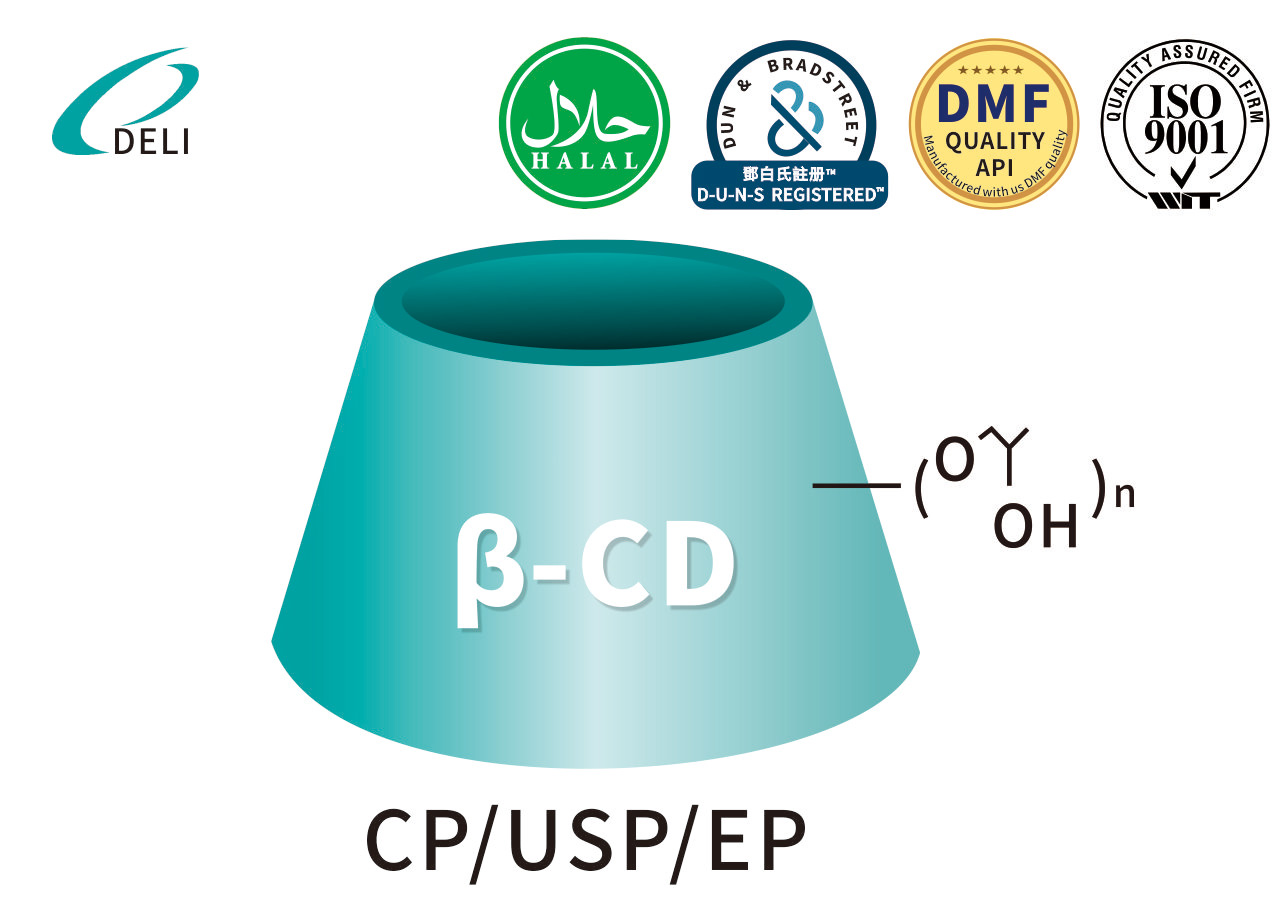
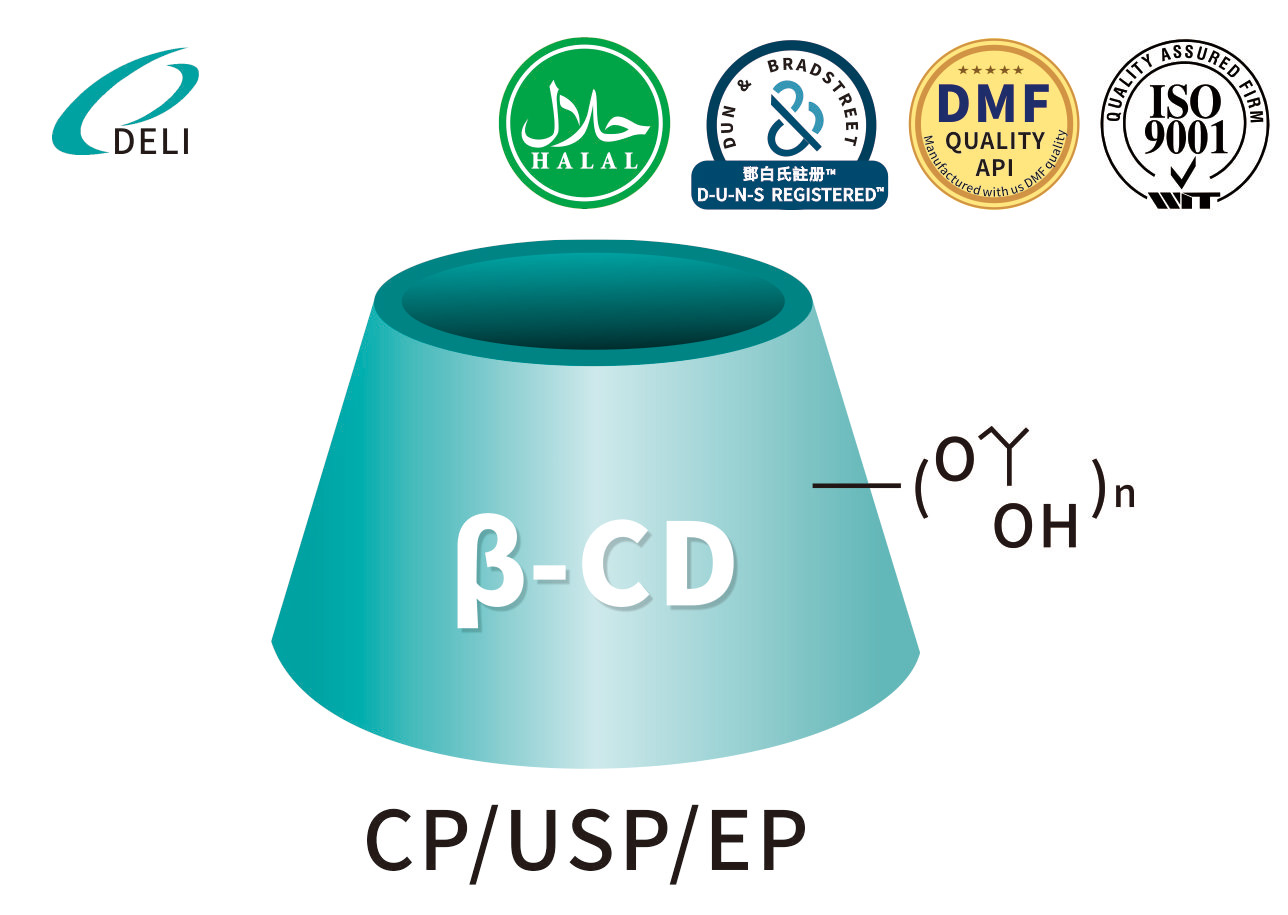
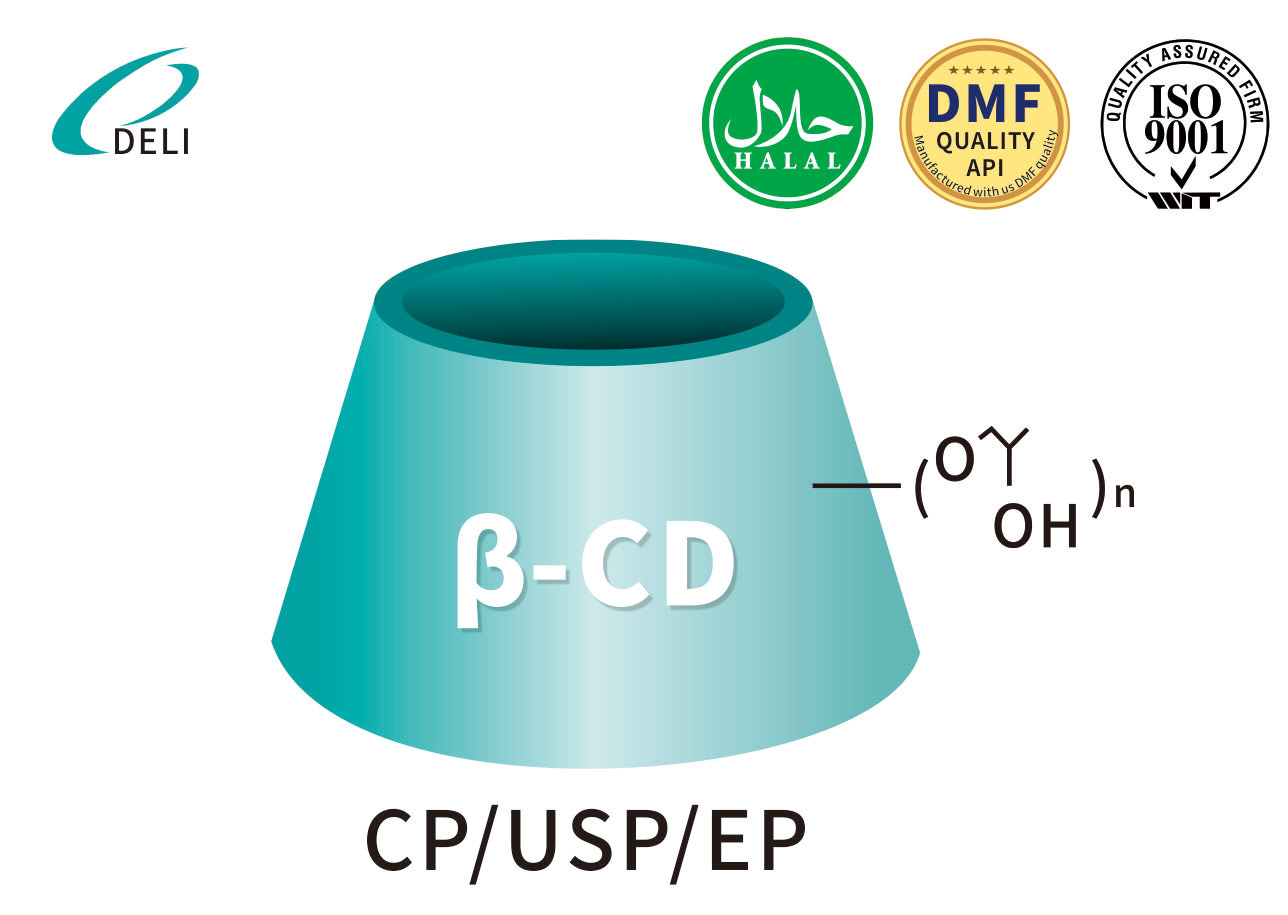
Hydroxypropyl Betadex (HPBCD), also known as Hydroxypropyl-β-Cyclodextrin (HPβCD) or 2-Hydroxypropyl-beta-cyclodextrin, is a water-soluble cyclodextrin derivative used as a pharmaceutical excipient in drug formulation development.
With its hydrophilic exterior and hydrophobic cavity, HPBCD can form inclusion complexes with suitable drug molecules. This property makes it particularly useful for the development of injectable and parenteral formulations of poorly water-soluble APIs, where improving aqueous solubility and maintaining formulation performance are important development objectives.
Our Hydroxypropyl Betadex CAS 128446-35-5 is available in pharmaceutical grade and can be used in formulation development for intravenous and other parenteral drug products. Technical documents, COA, samples, and product information are available for pharmaceutical development and evaluation.
Poor aqueous solubility is a common challenge during the development of injectable drug products. An API with insufficient water solubility may require the use of a solubilization strategy before it can be incorporated into an aqueous parenteral formulation.
HPBCD provides one possible solubility-enhancement approach by forming a reversible inclusion complex with suitable drug molecules. The hydrophobic portion of the API can interact with the cyclodextrin cavity while the hydrophilic exterior of HPBCD remains compatible with the aqueous formulation environment.
This mechanism has been investigated in a range of parenteral formulation studies, and HPβCD has been used in injectable drug products. For example, published studies describe HPβCD-solubilized injectable diclofenac and other parenteral formulations developed using HPβCD complexation.
Hydroxypropyl Betadex can be evaluated as part of a parenteral formulation development strategy for APIs with limited aqueous solubility or formulation challenges related to drug solubilization.
The API is first evaluated for aqueous solubility, lipophilicity, pKa, chemical stability, dose strength, and other physicochemical properties that may affect the suitability of cyclodextrin complexation.
Different HPBCD concentrations can be evaluated to determine their effect on the apparent aqueous solubility of the target API. Phase-solubility studies may be used to investigate the interaction between HPBCD and the drug molecule.
HPBCD can form inclusion complexes with suitable APIs. The strength and characteristics of the drug–HPBCD interaction should be evaluated experimentally for each formulation candidate.
After identifying a suitable HPBCD concentration range, formulation developers can optimize additional parameters such as pH, API concentration, buffer system, tonicity, excipient compatibility, and chemical and physical stability.
The selected formulation should be evaluated for appearance, clarity, precipitation, pH, assay, degradation products, particulate matter, sterility-related requirements, container compatibility, and stability according to the intended injectable dosage form and applicable regulatory requirements.
For poorly water-soluble APIs, HPBCD may be incorporated into an injectable formulation to increase the apparent aqueous solubility of the drug. The resulting formulation strategy can help pharmaceutical developers investigate higher drug concentrations or aqueous dosage forms that may otherwise be difficult to formulate.
| Formulation Challenge | Potential Role of HPBCD |
|---|---|
| Poor aqueous solubility of API | Forms inclusion complexes to improve apparent drug solubility |
| Difficulty developing an aqueous formulation | Provides a cyclodextrin-based solubilization approach for formulation screening |
| Need for parenteral drug delivery | Can be evaluated as a pharmaceutical excipient in suitable injectable formulations |
| API precipitation during formulation development | May help maintain the drug in a solubilized state when formulation conditions are appropriately optimized |
Note: The appropriate HPBCD concentration and formulation composition must be determined through formulation-specific development and stability studies. Higher cyclodextrin concentrations are not necessarily better for every API.
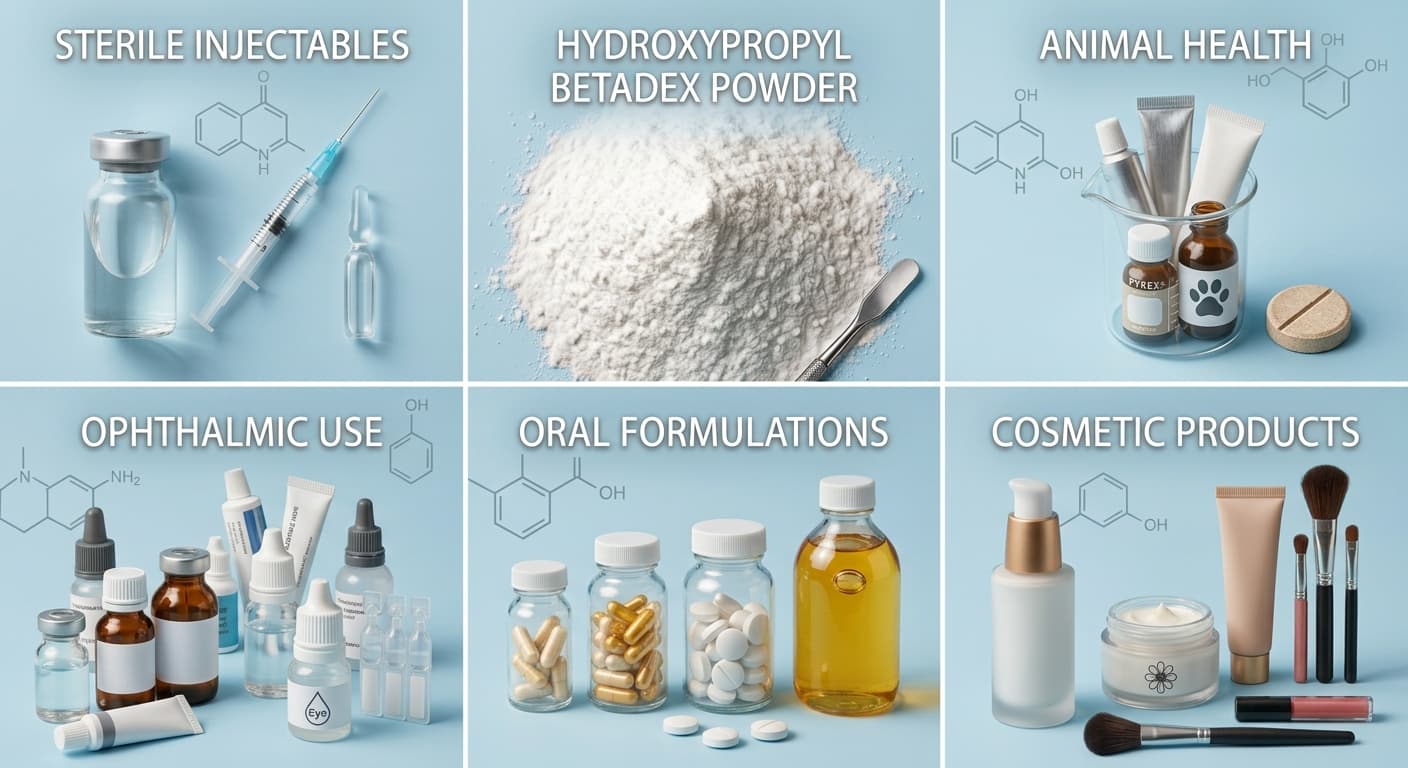
Hydroxypropyl Betadex can be investigated for a variety of pharmaceutical development programs, including:
For intravenous formulations, formulation developers must consider more than API solubility alone. The final drug product may require evaluation of solution clarity, precipitation behavior, pH, osmolality, particulate matter, chemical stability, excipient compatibility, container closure compatibility, and sterility-related requirements.
HPBCD can therefore be considered as one component of a broader injectable formulation development strategy. The selection of HPBCD should be based on the properties of the API and the performance requirements of the final dosage form.
HPBCD is not expected to provide the same formulation benefit for every API. The suitability of HPBCD depends on the molecular structure and physicochemical characteristics of the drug, as well as the desired formulation performance.
Hydrophobic or poorly water-soluble molecules with suitable size and structural characteristics may be candidates for cyclodextrin complexation. Pharmaceutical developers can evaluate the interaction between the API and HPBCD through solubility studies, phase-solubility analysis, dissolution or precipitation studies, and other appropriate analytical methods.
Our technical team can provide product specifications and samples to support preliminary evaluation of HPBCD in pharmaceutical formulation development.
| Item | Specification |
|---|---|
| Appearance | White or almost white amorphous powder |
| Identification | Conforms |
| Average Degree of Substitution | 0.4 – 1.5 |
| Water Content | ≤ 10.0% |
| pH (1% Solution) | 5.0 – 7.5 |
| Residue on Ignition | ≤ 0.2% |
| Heavy Metals | ≤ 10 ppm |
| Propylene Glycol | ≤ 0.5% |
| Microbial Limit | Complies with applicable USP requirements |
| Assay | Conforms to USP |
Available Standards: USP / EP / ChP pharmaceutical grade available
Detailed Certificate of Analysis (COA), specification sheet, technical documents, and samples can be provided upon request.
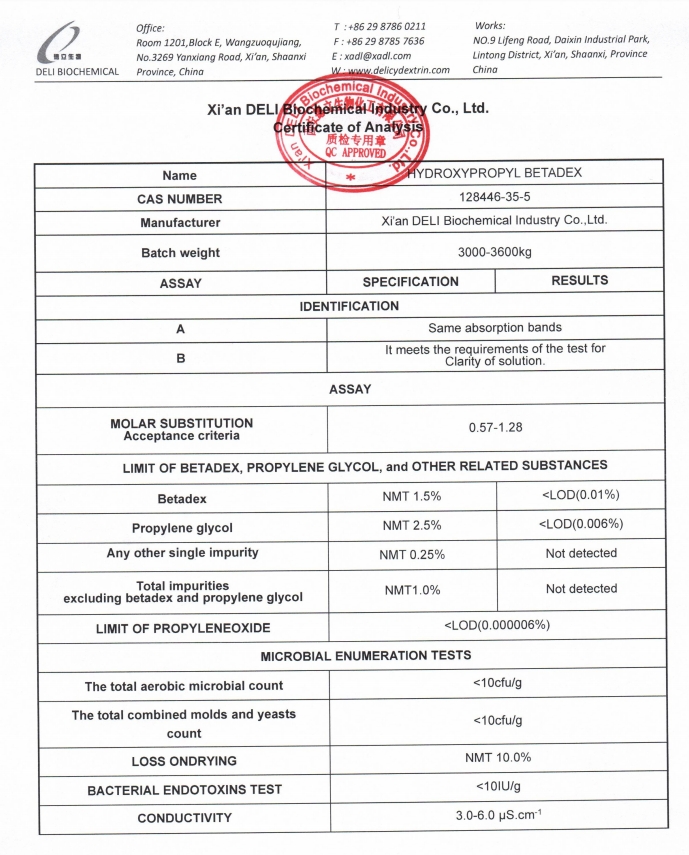
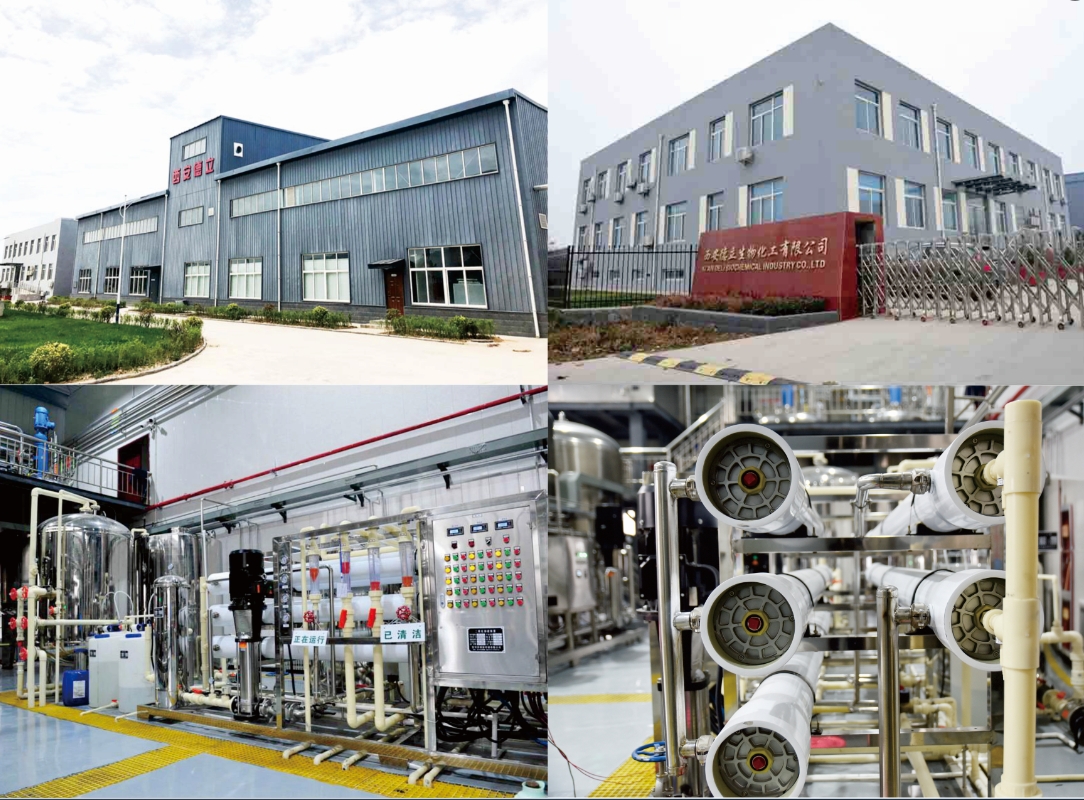
For customers developing injectable or parenteral drug products, excipient quality and batch-to-batch consistency are important considerations. Xi'an DELI controls key quality attributes of Hydroxypropyl Betadex throughout the manufacturing and testing process.
Xi'an DELI Biochemical Industry Co., Ltd. is a professional manufacturer specializing in cyclodextrin and cyclodextrin derivatives. Since 1999, we have focused on the development and manufacturing of cyclodextrin-based pharmaceutical and functional excipients.
With more than 27 years of manufacturing experience, our company provides Hydroxypropyl Betadex for pharmaceutical, veterinary, and other formulation applications. Our experience in cyclodextrin manufacturing enables us to focus on product consistency, quality control, documentation, and long-term supply.
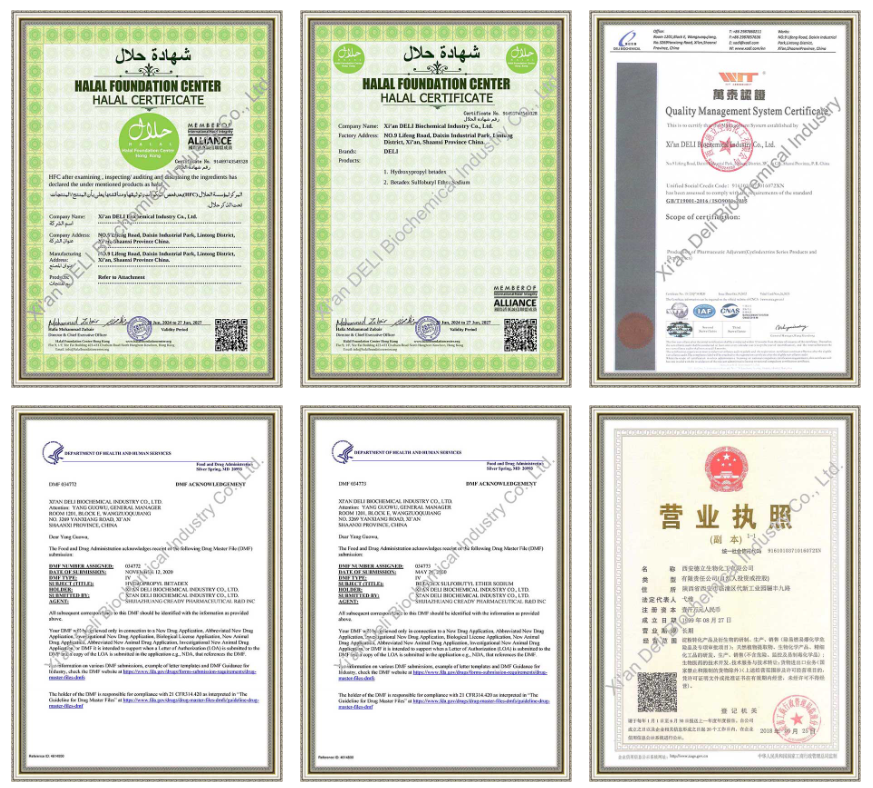
For pharmaceutical customers evaluating HPBCD as an excipient for injectable drug development, Xi'an DELI can provide technical and quality documentation to support supplier qualification and formulation development.
Additional documents can be discussed according to the regulatory and supplier qualification requirements of the target market.
Hydroxypropyl Betadex can be considered at different stages of pharmaceutical development, from early preformulation studies to formulation optimization and scale-up evaluation.
| Development Stage | Potential HPBCD Evaluation |
|---|---|
| Preformulation | API solubility and cyclodextrin compatibility screening |
| Formulation Development | HPBCD concentration and drug-to-cyclodextrin ratio optimization |
| Prototype Development | Evaluation of clarity, precipitation, pH, stability, and API concentration |
| Stability Study | Physical and chemical stability evaluation of the selected formulation |
| Scale-Up | Assessment of manufacturing process, excipient consistency, and batch reproducibility |
Hydroxypropyl Betadex is used as a pharmaceutical excipient in suitable injectable and parenteral formulations, particularly where cyclodextrin-based solubilization of a poorly water-soluble API is required.
Yes. HPβCD has been used in parenteral and intravenous drug formulations. Its suitability for a specific IV formulation should be established through formulation development, safety assessment, and applicable regulatory evaluation.
HPBCD can form reversible inclusion complexes with suitable drug molecules. This interaction may increase the apparent aqueous solubility of the API and support the development of an aqueous injectable formulation.
HPBCD can be a useful candidate for poorly water-soluble APIs when the drug molecule has suitable characteristics for cyclodextrin complexation. Compatibility and solubilization performance should be evaluated experimentally for each API.
Important factors may include API solubility, HPBCD concentration, drug-to-cyclodextrin ratio, pH, buffer system, osmolality, solution clarity, precipitation behavior, chemical stability, particulate matter, container compatibility, and the requirements of the intended injectable dosage form.
HPBCD may contribute to formulation stability in some drug systems by interacting with the API or other formulation components. However, the effect on chemical and physical stability is formulation-specific and should be demonstrated through appropriate stability studies.
HPBCD and SBECD are both highly water-soluble cyclodextrin derivatives used in pharmaceutical formulation development. Their molecular structures, physicochemical properties, and interactions with individual APIs are different, so the appropriate cyclodextrin should be selected according to the specific formulation requirements.
Yes. Xi'an DELI can provide HPBCD samples, COA, specifications, and technical documents for customers conducting pharmaceutical formulation research and supplier evaluation.
Yes. Depending on the project and target market, we can provide COA, specification, TDS, SDS, DMF-related documentation, TSE/BSE statements, and other available quality documents.
The suitability of an HPBCD product for a sterile injectable manufacturing process depends on the specified grade, manufacturing controls, sterilization strategy, and requirements of the final drug product. Customers should confirm the required specifications and processing conditions with the supplier before use.
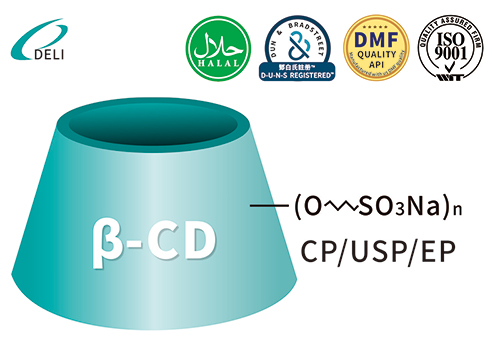
Xi'an DELI Biochemical Industry Co., Ltd. specializes in the manufacturing and supply of Hydroxypropyl Betadex (HPBCD), Betadex Sulfobutyl Ether Sodium (SBECD), and other cyclodextrin derivatives.
Since 1999, we have worked with customers in pharmaceutical formulation, drug development, veterinary pharmaceutical, and related industries. Our manufacturing experience, quality control system, technical documentation, and international supply capability allow us to support customers from initial sample evaluation through ongoing commercial supply.
Whether you are developing a new injectable formulation, IV drug product, parenteral formulation, or solubility-enhanced pharmaceutical formulation, our team can provide HPBCD samples and technical information for your evaluation.
For Hydroxypropyl Betadex CAS 128446-35-5, please contact us for:
Product: Hydroxypropyl Betadex (HPBCD)
CAS: 128446-35-5
Application: Injectable Drug Formulations / Parenteral Formulations
Contact Xi'an DELI for samples, technical documentation, and formulation-development support.