Hydroxypropyl Betadex CAS 128446-35-5 for Poorly Soluble Drug Formulation
CAS Number: 128446-35-5
Product Category: Pharmaceutical Excipient
Main Function: Drug solubility enhancement and inclusion complex formation
Appearance: White or almost white amorphous powder
Water Solubility: Highly soluble in water
Applications: Drug formulation, injectable preparations, oral formulations, and topical drugs
Quality Standard: USP / EP / ChP Pharmaceutical Grade
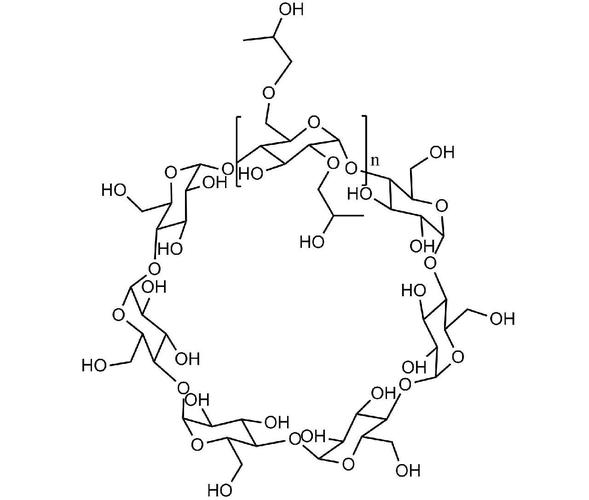
Hydroxypropyl Betadex CAS 128446-35-5 for Poorly Soluble Drug Formulation Hydroxypropyl Betadex (HPβCD), also known as Hydroxypropyl Beta Cyclodextrin, is a high-purity pharmaceutical excipient widely used in the formulation of poorly water-soluble drugs. With excellent water solubility and complexation properties, HPβCD can help improve the apparent solubility, dissolution, stability, and bioavailability of pharmaceutical compounds.
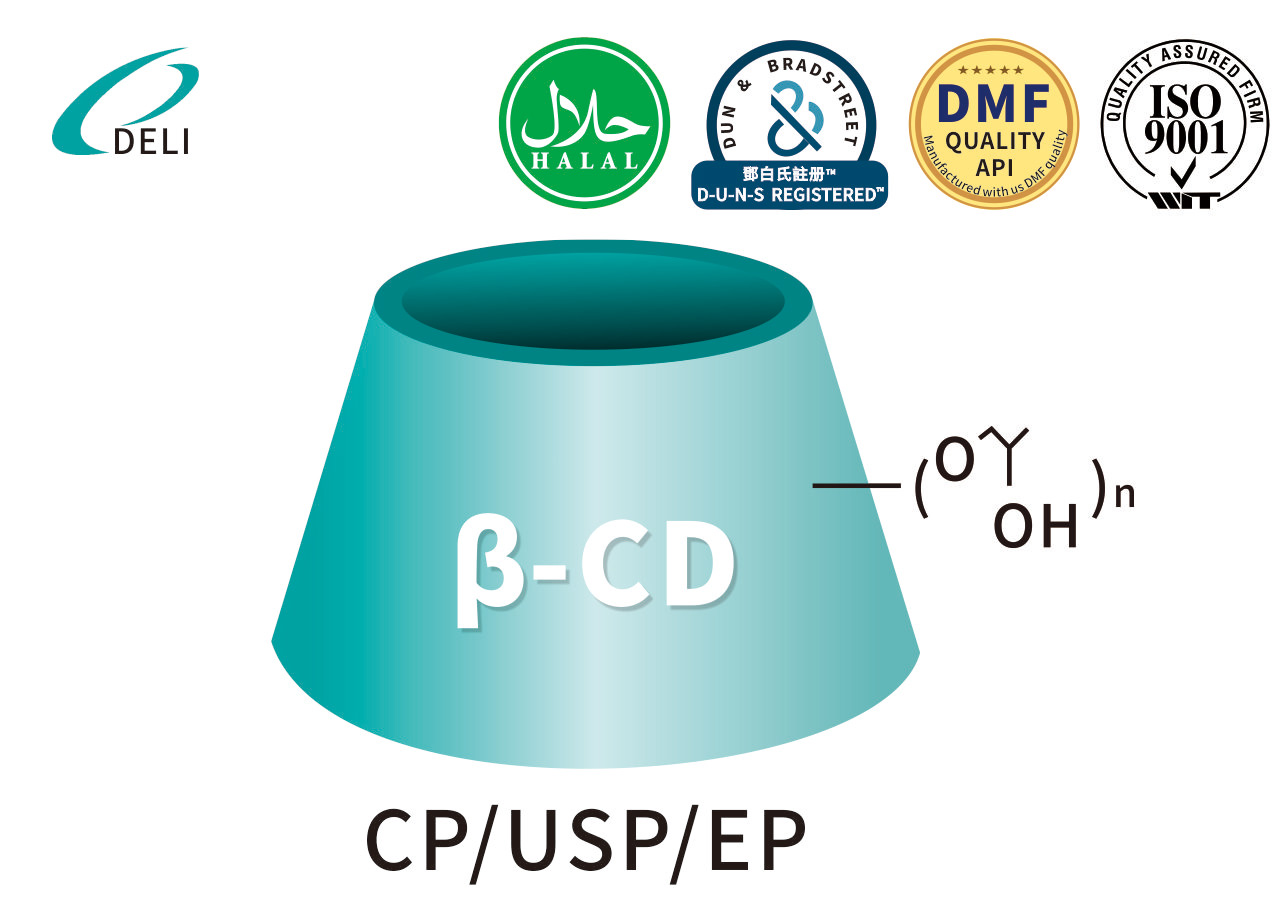
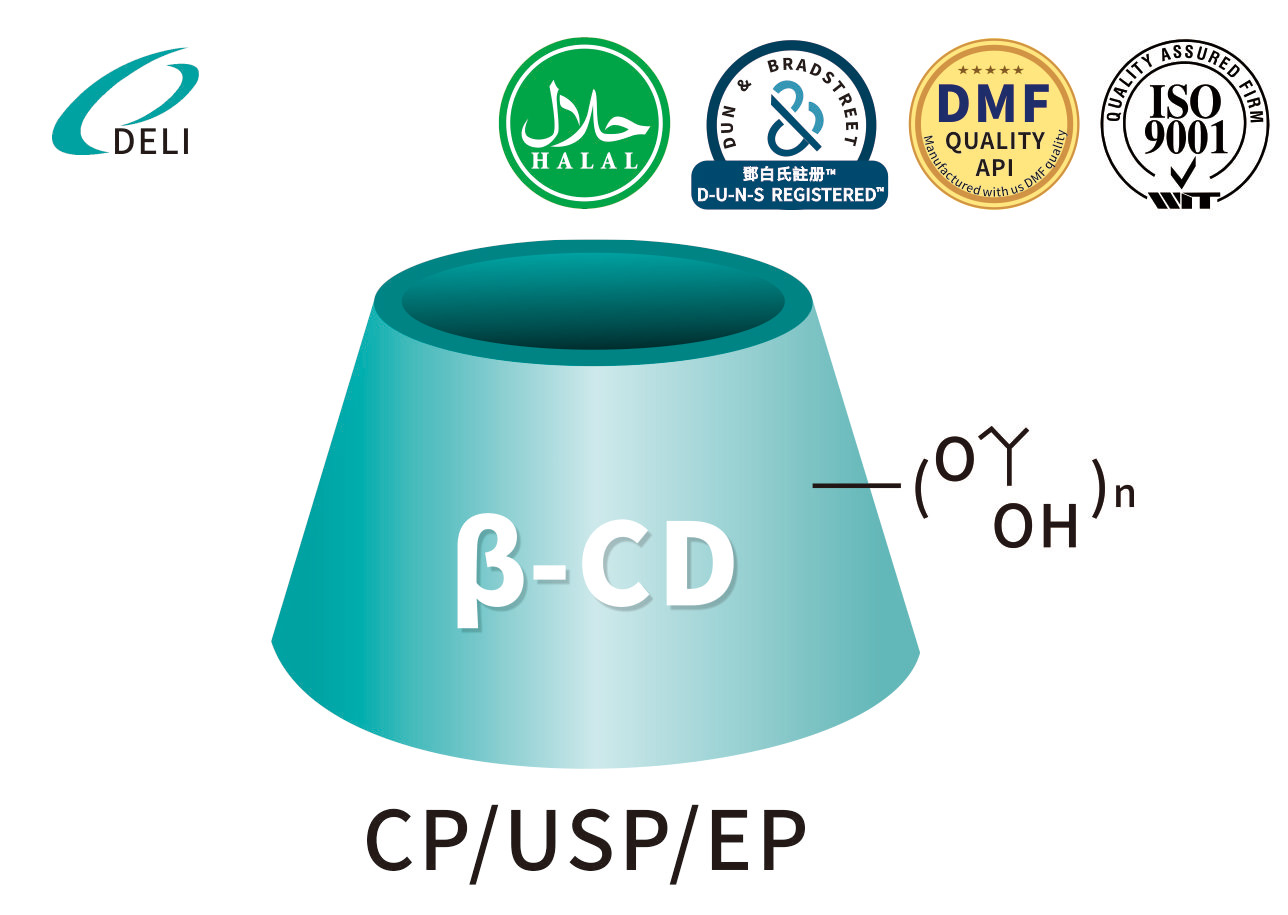
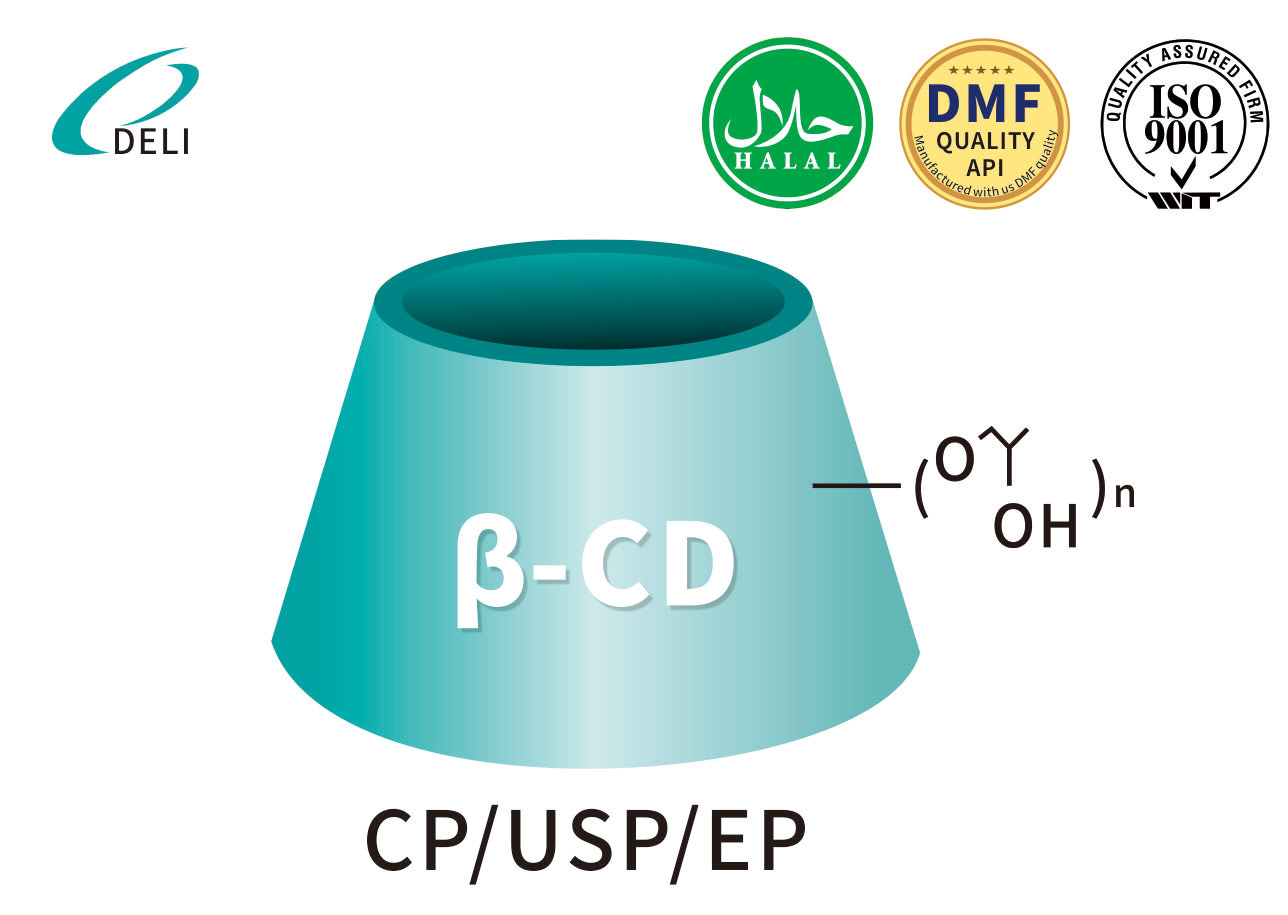
As a modified β-cyclodextrin derivative, Hydroxypropyl Betadex forms inclusion complexes with hydrophobic or poorly water-soluble drug molecules. This interaction can improve the aqueous solubility of selected active pharmaceutical ingredients (APIs), helping pharmaceutical developers design more effective and stable formulations without chemically modifying the drug molecule.
Our Hydroxypropyl Betadex is manufactured for pharmaceutical applications and is suitable for formulation development, process development, and commercial pharmaceutical production. Product quality is controlled according to applicable pharmacopeial requirements, including USP, EP, and ChP specifications.
✔ Improves the solubility of poorly water-soluble drugs
✔ Enhances dissolution and supports improved drug bioavailability
✔ Forms inclusion complexes with hydrophobic pharmaceutical compounds
✔ Helps improve the stability of selected drug substances
✔ Suitable for a variety of pharmaceutical dosage forms
✔ High water solubility compared with native β-cyclodextrin
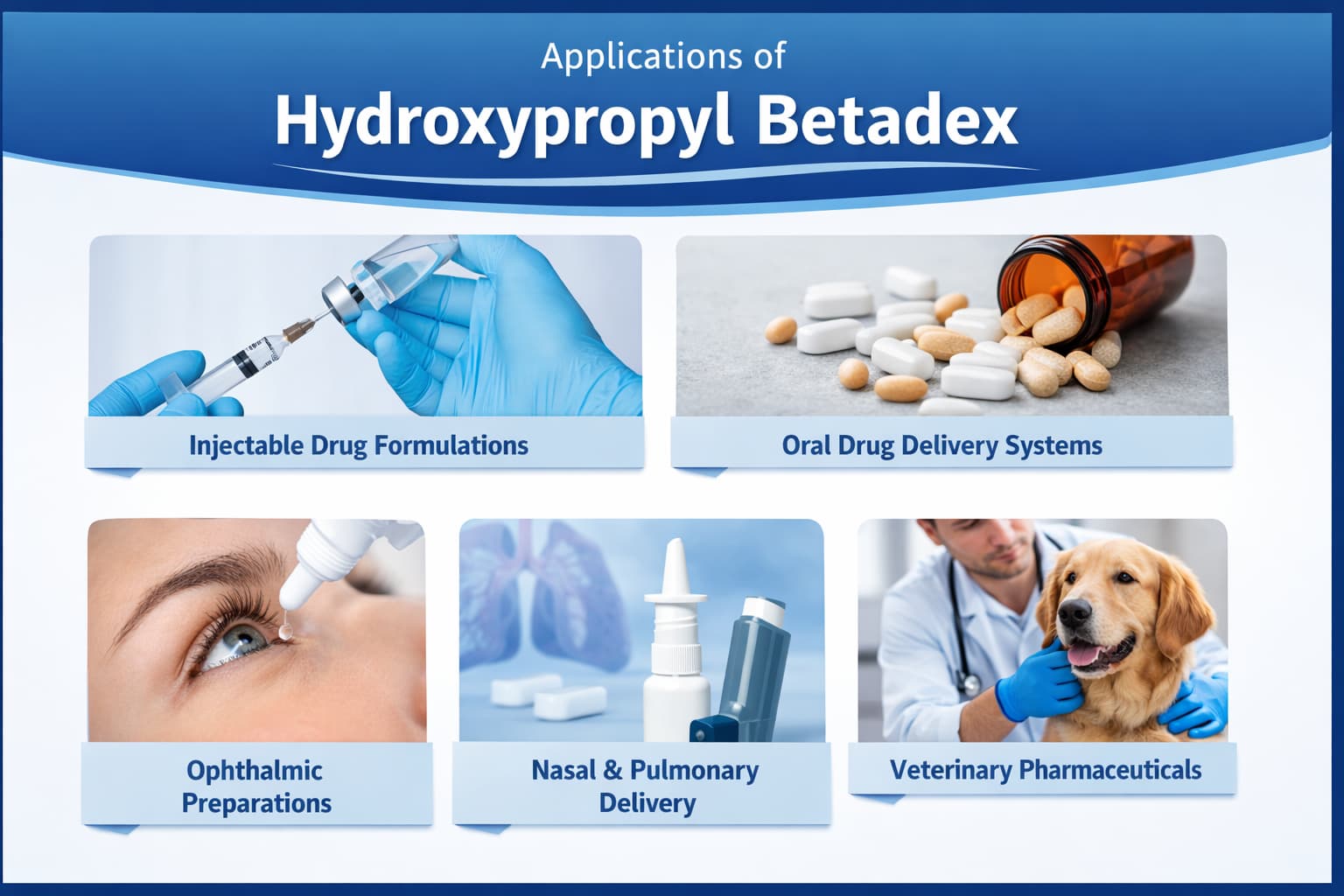
Hydroxypropyl Betadex is primarily used as a solubilizing and stabilizing excipient in pharmaceutical formulation development, particularly for drug substances with poor aqueous solubility. Its application can be considered across multiple dosage forms and drug delivery systems.
Hydroxypropyl Betadex can form inclusion complexes with poorly water-soluble drug molecules, increasing their apparent aqueous solubility and supporting improved dissolution. It is therefore useful during formulation development for compounds with challenging solubility characteristics.
Pharmaceutical-grade HPβCD can be used in parenteral formulation development to improve the aqueous solubility of selected poorly soluble drug substances and help maintain formulation stability. Its high water solubility makes it suitable for applications where aqueous solubility is a key formulation consideration.
In oral formulations, Hydroxypropyl Betadex can improve the dissolution behavior of poorly water-soluble compounds and support formulation strategies designed to enhance drug absorption and bioavailability. It can be considered for tablets, capsules, powders, and oral liquid formulations.
HPβCD can be used in ophthalmic formulation development to improve the apparent solubility of selected poorly soluble drug substances in aqueous systems, supporting the development of clear and stable formulations.
Hydroxypropyl Betadex may be considered as a solubilizing excipient in selected nasal and pulmonary drug delivery systems where improving the aqueous solubility of a drug substance is required.
Hydroxypropyl Betadex is also used in veterinary formulation development to improve the solubility and formulation performance of selected poorly water-soluble veterinary drug substances.
Poor aqueous solubility is a common challenge in pharmaceutical formulation development. Depending on the physicochemical properties of the active pharmaceutical ingredient (API), different solubility enhancement technologies may be considered, including cyclodextrin complexation, amorphous solid dispersions, surfactants, cosolvents, lipid-based formulations, and particle size reduction.
Hydroxypropyl Betadex (HPβCD) provides a different approach by forming non-covalent inclusion complexes with suitable drug molecules. Its hydrophilic exterior and relatively hydrophobic cavity allow certain poorly water-soluble APIs to associate with HPβCD and form water-compatible complexes, thereby increasing apparent aqueous solubility and supporting improved dissolution. The effectiveness of HPβCD depends on the molecular structure of the API, complexation affinity, formulation composition, and HPβCD concentration.
| Approach | Primary Mechanism | Potential Advantages | Development Considerations |
|---|---|---|---|
| HPβCD Complexation | Formation of water-compatible drug–cyclodextrin inclusion complexes | Can increase apparent aqueous solubility and improve dissolution; applicable to selected oral and liquid formulations | Requires suitable molecular fit and sufficient complexation; HPβCD concentration and drug-to-HPβCD ratio need optimization |
| Amorphous Solid Dispersion | Reduces drug crystallinity and disperses the API in a polymeric matrix | Can substantially improve dissolution of crystalline poorly soluble APIs | Physical stability, recrystallization, polymer selection, drug loading, and manufacturing process require careful evaluation |
| Surfactants | Micellar or interfacial solubilization | Can improve the apparent solubility and dispersion of hydrophobic compounds | Surfactant type and concentration may affect tolerability, stability, permeability, and other formulation properties |
| Cosolvents | Changes the solvent environment to increase drug solubility | Straightforward approach for some liquid formulations | Cosolvent concentration, precipitation after dilution, tolerability, and compatibility with the final dosage form must be evaluated |
| Lipid-Based Formulations | Solubilization of lipophilic APIs in oils, emulsions, or self-emulsifying systems | Useful for selected highly lipophilic compounds and oral delivery strategies | Requires optimization of lipid composition, dispersion behavior, physical stability, and in vivo performance |
| Particle Size Reduction | Increases surface area to accelerate dissolution | Can improve dissolution without chemically modifying the API | Does not necessarily increase intrinsic equilibrium solubility; particle aggregation, physical stability, and process control may be important |
HPβCD can be particularly useful when formulation developers need to increase the aqueous solubility of a poorly water-soluble API while maintaining the API in its original chemical form. Rather than permanently modifying the drug molecule, HPβCD interacts with suitable hydrophobic regions of the API through reversible, non-covalent complexation.
This approach can be useful during preformulation and formulation screening, especially when the development target involves an aqueous solution, oral liquid, injectable formulation, ophthalmic preparation, or another dosage form where insufficient aqueous solubility limits the achievable drug concentration.
HPβCD should not be selected solely on the basis of the API's low water solubility. A systematic formulation study can help determine whether cyclodextrin complexation is appropriate for a particular drug.
Phase-solubility studies are commonly used to investigate drug–cyclodextrin interactions and to help determine the concentration range of cyclodextrin required for a specific API. Importantly, the optimal HPβCD level should be determined experimentally rather than assuming that a higher cyclodextrin concentration will always provide better formulation performance. Excess cyclodextrin may not produce proportional benefits and, depending on the API and formulation, can influence drug permeability or other formulation characteristics.
There is no single solubility enhancement technology that is optimal for every poorly soluble drug. HPβCD, amorphous solid dispersion, surfactant systems, lipid-based formulations, cosolvents, and particle engineering each address solubility and dissolution limitations through different mechanisms.
For APIs that demonstrate suitable complexation with HPβCD, cyclodextrin-based formulation can offer a practical route to increase apparent aqueous solubility and facilitate formulation development. The final selection should be based on API characteristics, target dosage form, required drug concentration, stability, manufacturability, and overall formulation performance.
Xi'an DELI Biochemical Industry Co., Ltd. supplies pharmaceutical-grade Hydroxypropyl Betadex for formulation development and solubility enhancement studies. Technical documents such as COA, TDS, and available regulatory support documents can be provided for evaluation.
Xi’an Deli Biochemical Industry Co., Ltd. has more than 27 years of experience in the manufacturing of cyclodextrin derivatives for pharmaceutical and related applications. Our core products include Hydroxypropyl Betadex (HPβCD), β-Cyclodextrin, and Betadex Sulfobutyl Ether Sodium (SBECD).
We supply pharmaceutical excipients to pharmaceutical companies, formulation developers, veterinary pharmaceutical companies, and chemical companies worldwide. Our products support applications including solubility enhancement, formulation development, drug delivery, and pharmaceutical production.
With stable manufacturing capabilities and extensive experience in cyclodextrin production, we provide consistent product quality, technical documentation, regulatory support, and international supply services for customers at different stages of pharmaceutical development.

Our Hydroxypropyl Betadex is manufactured under controlled production and quality management procedures to provide consistent quality and reliable performance between batches. The product is available for pharmaceutical formulation development and commercial applications.
The product specifications are developed with reference to major pharmacopeial requirements, including USP, EP, and ChP. Detailed specifications and quality documentation can be provided according to customer requirements.
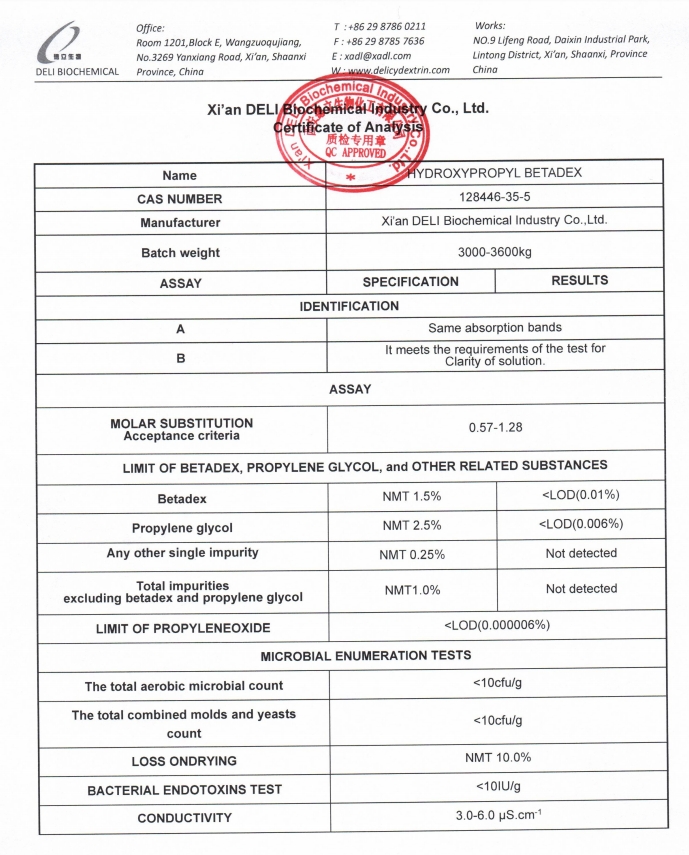
DMF documentation is available to support pharmaceutical regulatory submissions. We can provide technical and quality documents including COA, TDS, specifications, and other supporting documents according to customer requirements.
With more than 27 years of experience in cyclodextrin manufacturing, Xi’an Deli Biochemical Industry Co., Ltd. provides Hydroxypropyl Betadex for pharmaceutical formulation development and commercial applications.
✔ More than 27 years of cyclodextrin manufacturing experience
✔ Pharmaceutical-grade Hydroxypropyl Betadex
✔ Product specifications aligned with USP, EP, and ChP requirements
✔ Stable production capacity and consistent batch quality
✔ Technical documentation and regulatory support
✔ Support for formulation development and pharmaceutical applications
✔ International supply and responsive customer service
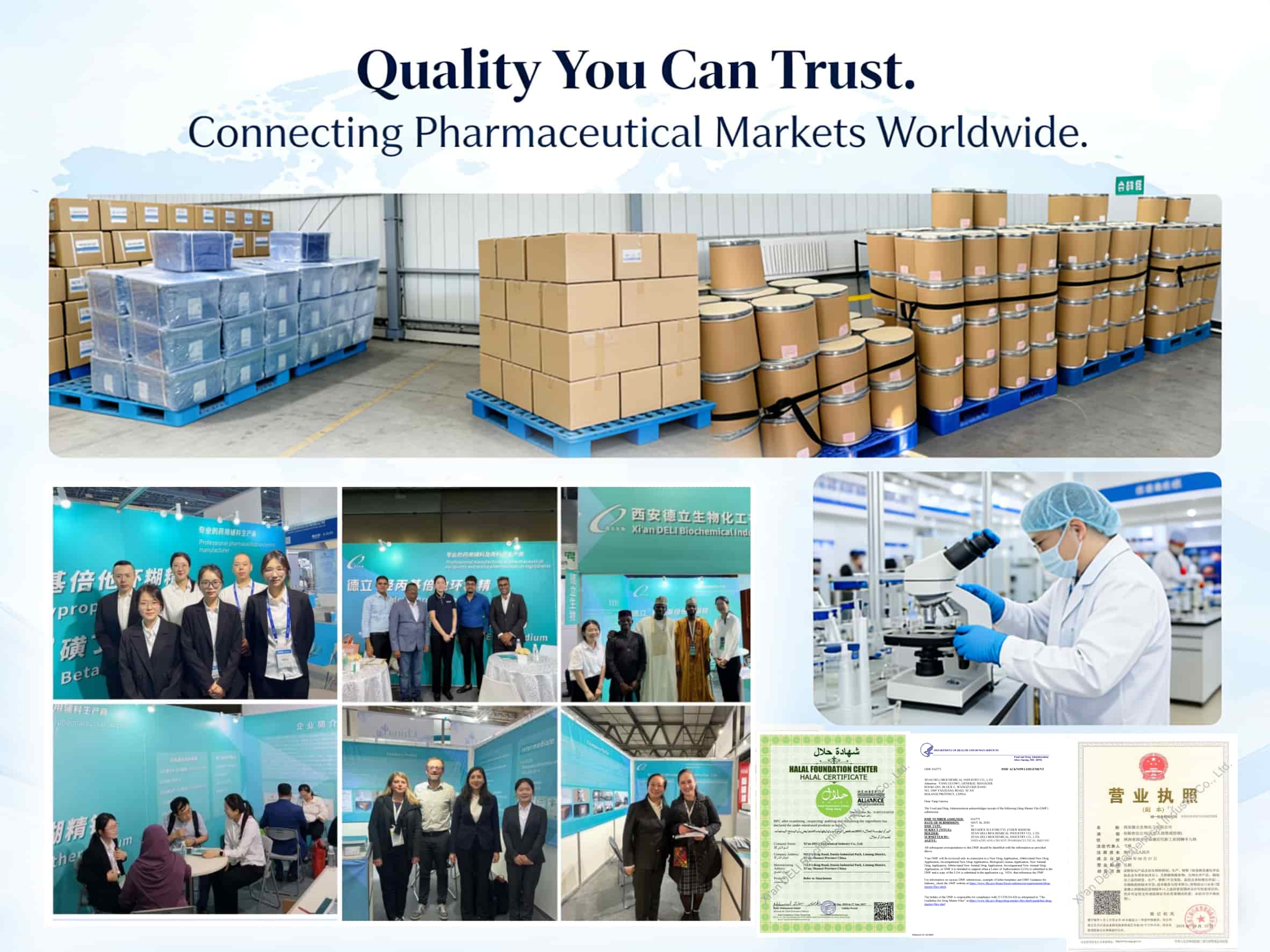
We provide flexible ordering options and reliable international delivery to support customers from laboratory-scale formulation development to commercial pharmaceutical production.
✔ T/T (Bank Transfer)
✔ L/C at sight
✔ Other payment terms can be discussed based on order volume and cooperation requirements
✔ Express delivery such as DHL, FedEx, and UPS for samples and small quantities
✔ Air freight for medium-volume orders
✔ Sea freight for bulk shipments
✔ Samples: typically available within 3–5 working days
✔ Bulk orders: lead time depends on order quantity and production schedule
We use suitable packaging and shipping arrangements to help ensure safe delivery and product integrity during international transportation.

HPβCD can improve the apparent aqueous solubility of suitable poorly water-soluble APIs through inclusion complexation. The hydrophobic cavity of HPβCD can accommodate certain hydrophobic regions of drug molecules, while its hydrophilic exterior interacts favorably with water. This can help maintain the drug in a more water-compatible form and support improved dissolution.
No. The effectiveness of HPβCD depends on the molecular structure and physicochemical properties of the API, including molecular size, hydrophobicity, ionization behavior, and its affinity for cyclodextrin complexation. Formulation-specific solubility and compatibility studies are recommended before selecting HPβCD for a drug development program.
The appropriate HPβCD concentration should be determined experimentally. Formulation developers may initially evaluate API solubility at different HPβCD concentrations and investigate the drug-to-HPβCD relationship using phase-solubility studies. The final concentration should also consider the target dosage form, required drug concentration, stability, tolerability, and other formulation requirements.
HPβCD can support improved dissolution when complexation increases the apparent aqueous solubility of a suitable API. However, the actual dissolution performance depends on the API, HPβCD concentration, formulation composition, and test conditions. Dissolution testing should therefore be used to confirm the effect in the specific formulation.
HPβCD can be considered for different pharmaceutical dosage forms, including selected oral and injectable formulations, when its quality and formulation suitability meet the requirements of the intended application. For injectable products, additional formulation-specific evaluation such as concentration, osmolality, pH, stability, sterility-related requirements, and compatibility should be considered during development.
HPβCD and amorphous solid dispersion enhance drug performance through different mechanisms. HPβCD primarily uses reversible inclusion complexation to increase apparent aqueous solubility, while amorphous solid dispersion reduces or disrupts the crystalline state of an API within a polymeric matrix. The more appropriate approach depends on the API's physicochemical properties, target dosage form, drug loading, stability requirements, and manufacturing process.
By increasing apparent solubility and supporting dissolution, HPβCD may contribute to improved drug absorption for certain poorly soluble APIs. However, increased solubility does not automatically result in increased bioavailability. The final effect depends on factors such as drug permeability, formulation behavior, gastrointestinal conditions, and the extent to which the API remains available for absorption. In vivo studies may be required to confirm any bioavailability benefit.
For an initial formulation assessment, useful information includes the API name, aqueous solubility, dose strength, molecular weight, logP or other lipophilicity data, pKa, intended dosage form, target drug concentration, and any known stability or compatibility concerns. Based on this information, HPβCD concentration and formulation screening conditions can be considered for further development.
For COA, samples, technical documents, product specifications, or quotation, please contact us.
Product: Hydroxypropyl Betadex (HPβCD)
CAS: 128446-35-5
We will respond within 48 hours.