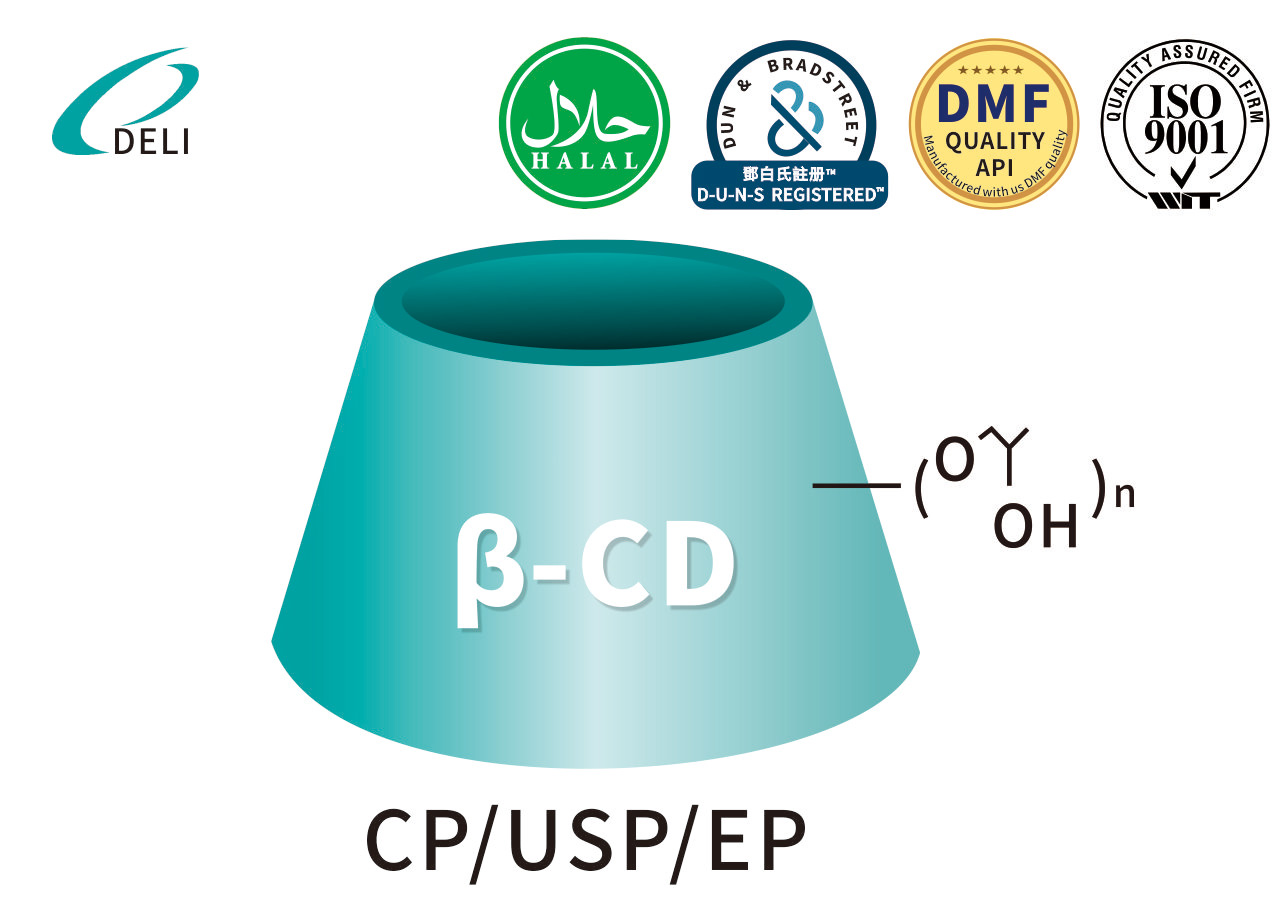
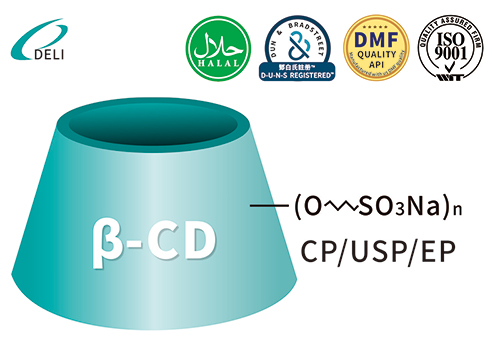
The discovery of cyclodextrin is one of the most important steps forward in the history of food and medicine. This naturally occurring cyclic oligosaccharide has changed the way we deliver drugs, keep food fresh, and use a lot of other chemicals in industry. The pruduct makes inclusion complexes that address important problems in many fields thanks to its distinctive molecular structure, which has a hydrophobic inner cavity and a hydrophilic exterior surface. This flexible excipient is changing formulation science and manufacturing processes all over the world. It can do everything from improving drug absorption to hiding bad tastes in medicines.
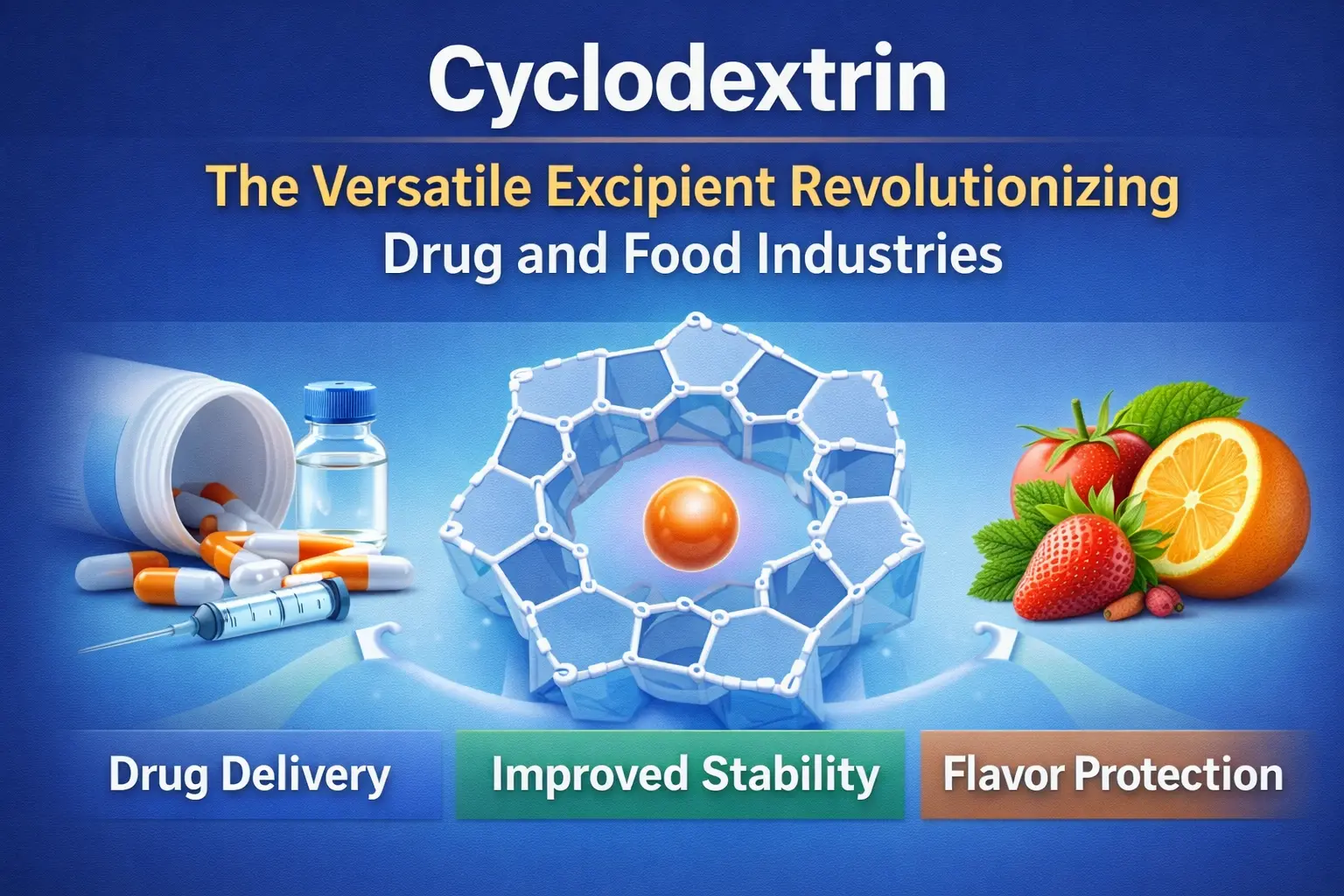
When we look at how cyclodextrin works at the molecular level, the interesting field of supramolecular chemistry comes to life. The glucose units in these cone-shaped molecules are connected by α-1,4-glycosidic bonds. There are three main types: alpha-cyclodextrin, which has six glucose units, beta-cyclodextrin, which has seven units, and gamma-cyclodextrin, which has eight units.
The cavities in each version are a different size, which lets molecules attach and interact with different compounds. For alpha-cyclodextrin, the hydrophobic cavity width is between 4.7 and 5.3 Å, and for gamma-cyclodextrin, it is between 7.5-8.3 Å. This ability to pick the right size allows for accurate encapsulation of molecules based on their chemical and physical properties.
Temperature, pH, concentration ratios, and how thermodynamically compatible the host and guest molecules are are some of the things that affect how well molecules are encapsulated. Researchers have found that the best inclusion complex formation happens when the guest molecule fits perfectly inside the pruduct pocket, making the most of the van der Waals forces and hydrophobic interactions.
About 40% of drugs on the market and up to 90% of compounds in research have problems with not dissolving well in water. Cyclodextrin inclusion complexes solve this problem by making absorption and breakdown rates a lot better. When drug molecules that don't like water enter the pruduct pocket, they form a complex that keeps the drug in a state that looks like it's dissolved.
Clinical tests show that cyclodextrin complexation can make compounds that don't dissolve easily 200 to 500% more bioavailable. Voriconazole injection, which is made with betadex sulfobutyl ether sodium, is a good example of how well this method works in commercial medicines.
Problems with pharmaceutical stability cost the industry billions of dollars every year in product refunds and efforts to change the way drugs are made. Cyclodextrin encapsulation keeps light, oxygen, heat, and humidity from breaking down active medicinal ingredients that are sensitive to them.
The complex works as a molecular shield, greatly increasing the shelf life while keeping the therapeutic effectiveness. Also, controlled release formulations that give drugs continuously for long periods of time are possible when cyclodextrin is mixed with materials like hydroxypropyl methylcellulose.
Adherence by the patient is very important for the success of therapy, especially for kids and older people. A lot of active ingredients have sour, metallic, or otherwise unpleasant tastes that make people less likely to take their medicine as prescribed.
By putting the bad molecules inside the hydrophobic cavity, cyclodextrin encapsulation successfully hides these organoleptic properties. The taste buds can't pick up on the chemicals that are enclosed, but the drug can still be absorbed once it gets to the intestines.
When drugs are given through an IV, they must meet very high standards for safety and effectiveness. Cyclodextrin derivatives, especially sulfobutylether-beta-cyclodextrin and hydroxypropyl-beta-cyclodextrin, are very well tolerated when given through an IV.
These excipients make it possible to formulate chemicals that couldn't be delivered before because they dissolve well enough without using harmful cosolvents. The quick breakdown of inclusion complexes in blood plasma makes sure that the drug is available right away while preventing the buildup of excipients.
There is constant pressure on the food business to use fewer synthetic preservatives while keeping the quality and safety of their products. By encapsulating natural antimicrobials, antioxidants, and flavour ingredients in molecules, cyclodextrin technology offers new ways to solve problems.
Essential oils that are encapsulated keep their antibacterial properties but lose their strong flavours that could make food taste too strong. This application naturally extends the shelf life of products while meeting customer demand for "clean label" products.
A lot of good chemicals, like curcumin, resveratrol, and omega-3 fatty acids, are not bioavailable, which means they can't be used as medicine. Cyclodextrin complexation makes it much easier for these nutritional ingredients to be absorbed.
Studies show that plasma concentrations of curcumin-cyclodextrin complexes are 10–15 times higher than those of normal curcumin formulations. With this improvement, oral doses that weren't working before can now be used therapeutically for people looking for natural health options.
Volatile flavour compounds make it harder to store and prepare food in certain ways. When making something, high temperatures can ruin delicate flavours, and when it's stored, the conditions can make flavours move around or get worse.
Cyclodextrin encapsulation keeps these valuable chemicals safe during processing and lets them be released slowly during consumption. The technology keeps the flavours the same from the farm to the plate, which makes customers happier and improves the quality of the product.
Beyond its traditional uses in the medicine and food industries, it can be used in the environment. Through selective molecular recognition and encapsulation, these molecules are very good at getting rid of organic toxins from polluted water and land.
Materials made from the product can get herbicides, industrial solvents, and petroleum products out of environmental matrices. The pollutants that are encapsulated are easier to separate and safely get rid of, which helps clean up the environment around the world.
Advanced chemical sensor uses are made possible by the molecular recognition abilities that make it useful for drug delivery. Using modified cyclodextrin derivatives, individual molecules can be found in complex mixtures by creating inclusion complexes that send out signals that can be measured.
These sensors are used to test food safety, keep an eye on the surroundings, and make sure the quality of medicines. Host-guest chemistry is better than many other diagnostic methods because it is more selective and sensitive.
Formulators can make the best use of cyclodextrin by understanding the physics of inclusion complexes. Hydrophobic interactions, van der Waals forces, and hydrogen bonds between host and guest molecules are some of the forces that move things.
The stability constant is set by changes in enthalpy and entropy during complexation. This constant is directly linked to therapeutic or functional effects. In general, complexes that are stronger and work better have higher stability constants.
Nuclear magnetic resonance spectroscopy, differential scanning calorimetry, and X-ray crystallography are some of the most advanced analytical methods that can be used to study the structure and behaviour of complex systems in great detail. These tools make it possible to create formulations that work best for certain uses.
To make industrial cyclodextrin, you need to use complex bioengineering methods and strict quality control systems. Because the manufacturing process is so complicated, we need sources with a lot of experience making pharmaceutical excipients.
Temperature, pH, reaction time, and the way the product is cleaned all have a big effect on its quality and stability. To support commercial pharmaceutical research, suppliers must show that they can repeat batches and provide reliable supplies over a long period of time.
Regulatory compliance adds another level of difficulty, calling for detailed records and validation studies. Successful product suppliers keep their drug master files up to date and provide technical help for customer regulatory submissions.
As researchers find new methods for encapsulating molecules, the transformative effects of the product technology on pharmaceutical, food, and industrial uses keep growing. This flexible excipient solves important problems in drug transport, product stability, and performance improvement by using elegant molecular solutions.
There is a lot of hope for cyclodextrin innovation in the future. Researchers are still looking into new derivatives, improved applications, and combination technologies. As formulation problems get harder to solve, cyclodextrin's special properties make it an essential tool for creating new products in many different businesses around the world.
1. How is cyclodextrin different from other substances that make things dissolve better?
It doesn't just make solvents hold more, it does so through a unique chemical encapsulation process. Traditional solubilizers can't do all of these things at the same time, but this process can. It improves stability, masks tastes, and controls release.
2. How do I figure out which type of cyclodextrin will work best for my project?
The choice is mostly based on the size and features of the guest molecule. Alpha-cyclodextrin works best with small molecules, beta-cyclodextrin works best with medium-sized chemicals, and gamma-cyclodextrin works best with large molecules. Molecular modelling and experimental screening help make the selection process better.
3. If you use it, is there any reason to stay safe?
The safety profiles of natural cyclodextrins and approved versions are very good. Beta-cyclodextrin and its derivatives are usually thought to be safe for use in food. Pharmaceutical-grade materials, on the other hand, meet strict safety standards for human use.
4. What factors affect the security of an inclusion complex?
Molecular fit in the space, temperature, pH, concentration, and competing substances can all affect how stable a complex is. The best conditions maximise thermal favorability and reduce the amount of complex dissociation that happens during use and storage.
5. What effect does cyclodextrin have on how drugs are released?
Depending on how the formulation is made, it can speed up, slow down, or limit drug release. Rapid complex dissociation improves instant release, and polymer combinations allow for extended release patterns that can be tailored to specific therapeutic needs.
6. Is it possible to use cyclodextrin with other ingredients?
It has been shown that works well with most medication excipients. Combining polymers, surfactants, and other useful excipients in smart ways can often provide benefits that go beyond what each component can do on its own.
You can trust DELI Biochemical as a cyclodextrin producer. They have over 26 years of experience making pharmaceutical excipients that can help you with even the most difficult formulation projects. Our wide range of the products for sale and proven ability to make them well help pharmaceutical companies reach new heights in drug delivery and stability improvement.
Contact our technical team at xadl@xadl.com to discuss how our pruduct solutions can revolutionize your next formulation.
1. Jambhekar, S.S., Breen, P. "Cyclodextrins in pharmaceutical formulations II: solubilization, binding constant, and complexation efficiency." Drug Discovery Today 21, no. 2 (2016): 363-368.
2. Brewster, M.E., Loftsson, T. "Cyclodextrins as pharmaceutical solubilizers." Advanced Drug Delivery Reviews 59, no. 7 (2007): 645-666.
3. Kurkov, S.V., Loftsson, T. "Cyclodextrins." International Journal of Pharmaceutics 453, no. 1 (2013): 167-180.
4. Szejtli, J. "Introduction and General Overview of Cyclodextrin Chemistry." Chemical Reviews 98, no. 5 (1998): 1743-1754.
5. Carrier, R.L., Miller, L.A., Ahmed, I. "The utility of cyclodextrins for enhancing oral bioavailability." Journal of Controlled Release 123, no. 2 (2007): 78-99.
6. Challa, R., Ahuja, A., Ali, J., Khar, R.K. "Cyclodextrins in drug delivery: an updated review." AAPS PharmSciTech 6, no. 2 (2005): E329-E357.